After exploring Bangkok, we flew to Phuket. We spent several days at the Pullman Phuket Karon Beach Resort and Spa, a lovely hotel directly across from the beach. It felt secluded and peaceful, and we spent our time relaxing and exploring Phuket.
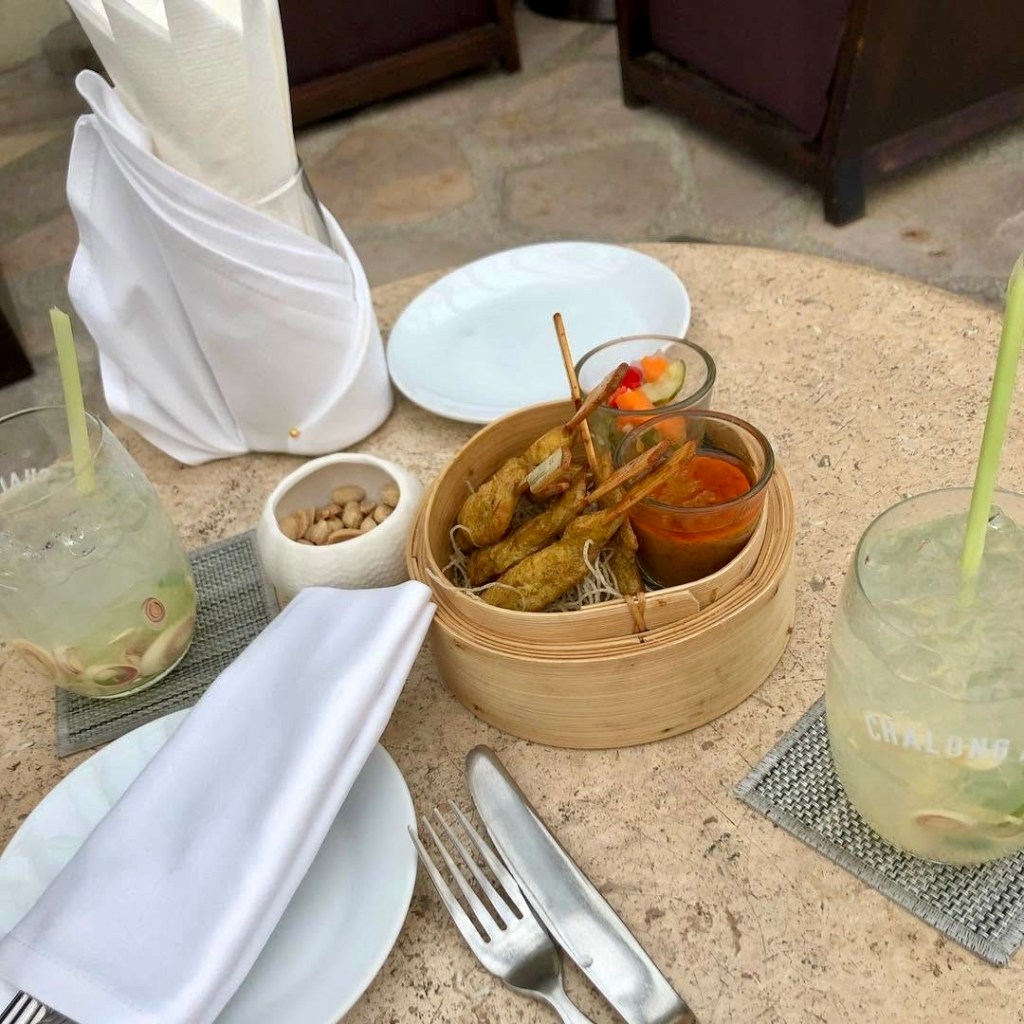


Phuket felt very different from Bangkok. The pace was slower, with mornings near the water and evenings having dinner or sitting by the pool as the sun went down. We enjoyed the resort amenities and especially the spa.



We took a boat through Phang Nga Bay, passing dramatic limestone cliffs rising out of the water. We snorkeled in some of the most beautiful places. I love floating in the water and seeing the beauty both above and below the waterline. Life, nature and a long pause.
We also stopped at a floating village for lunch and had time to walk around and take in how the community was built over the water.

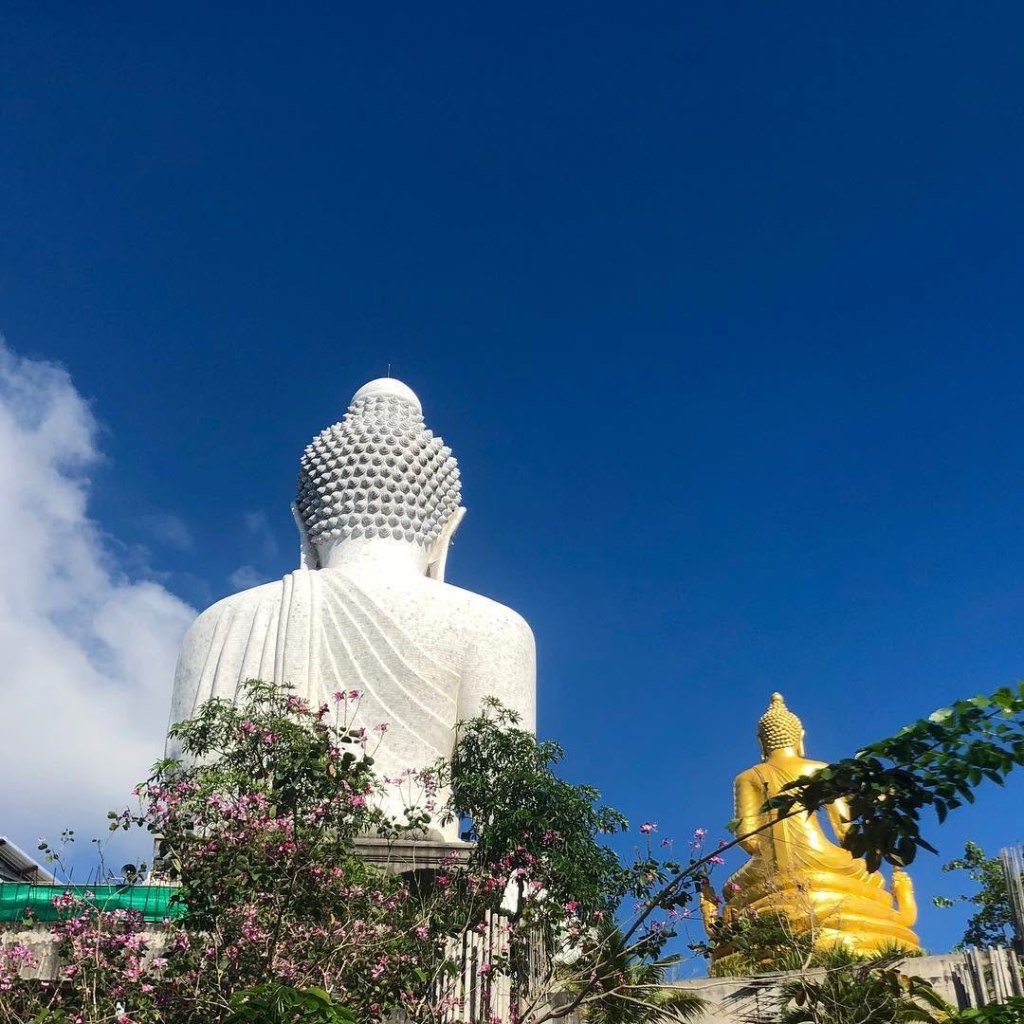

Another memorable experience was visiting the Phra Phutta Mingmongkol Akenakkiri Buddha, sitting high above Phuket. The Buddha was magnificent, but I also remember the peaceful atmosphere and the sweeping views across the island. Remembering what we learned from the flower lady in Bangkok, we brought lotuses and marigolds to honor the culture. It was peaceful and tranquil, and I am so glad we experienced more of Phuket beyond soaking up the sun by the water.
There was so much to see in Phuket, but one of my favorite memories was learning to prepare Thai food at the Phuket Thai Cookery School .
Cooking Beside the Beach

The school was located on Siray Beach, just steps from the sea, and it was absolutely beautiful. While I cooked, Paul sat nearby painting with watercolors. I remember looking out at the water as we prepared the food and thinking there could not be a more beautiful place to learn about Thai cooking.
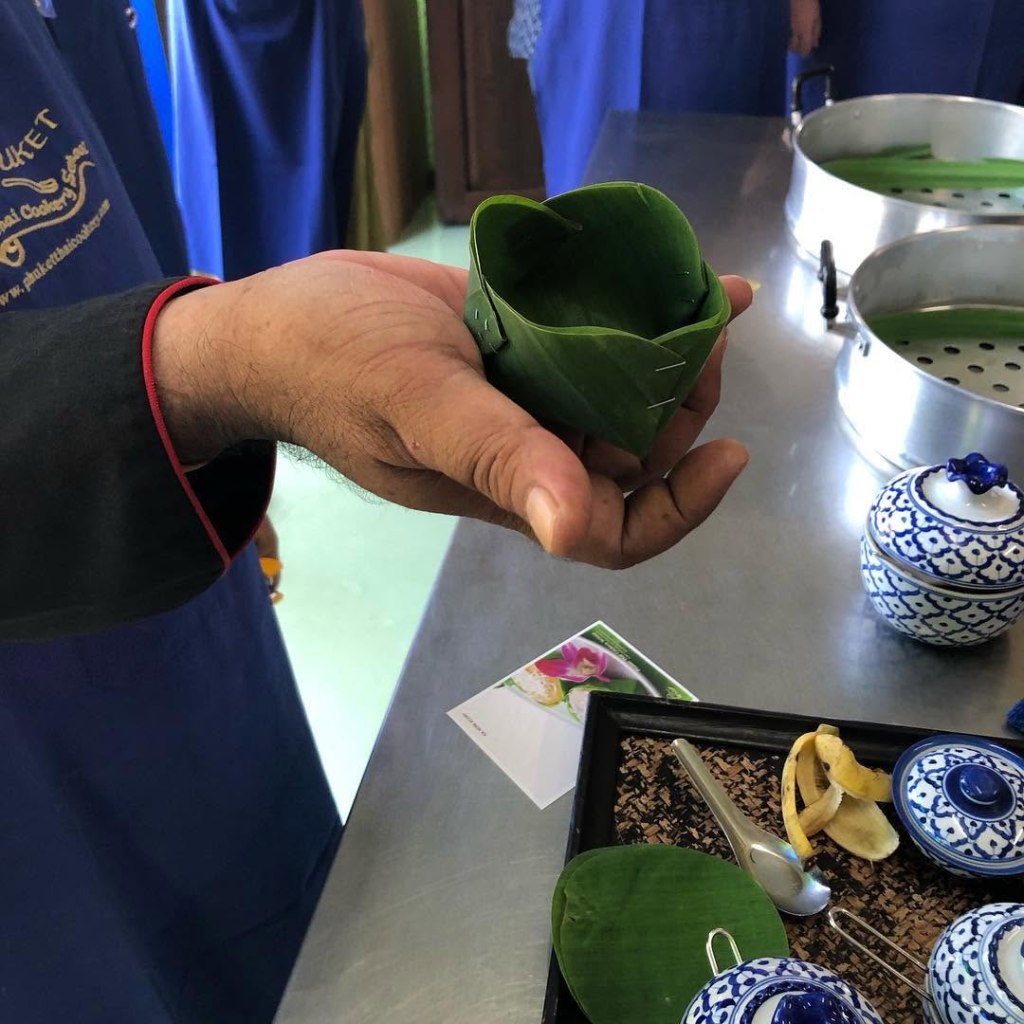
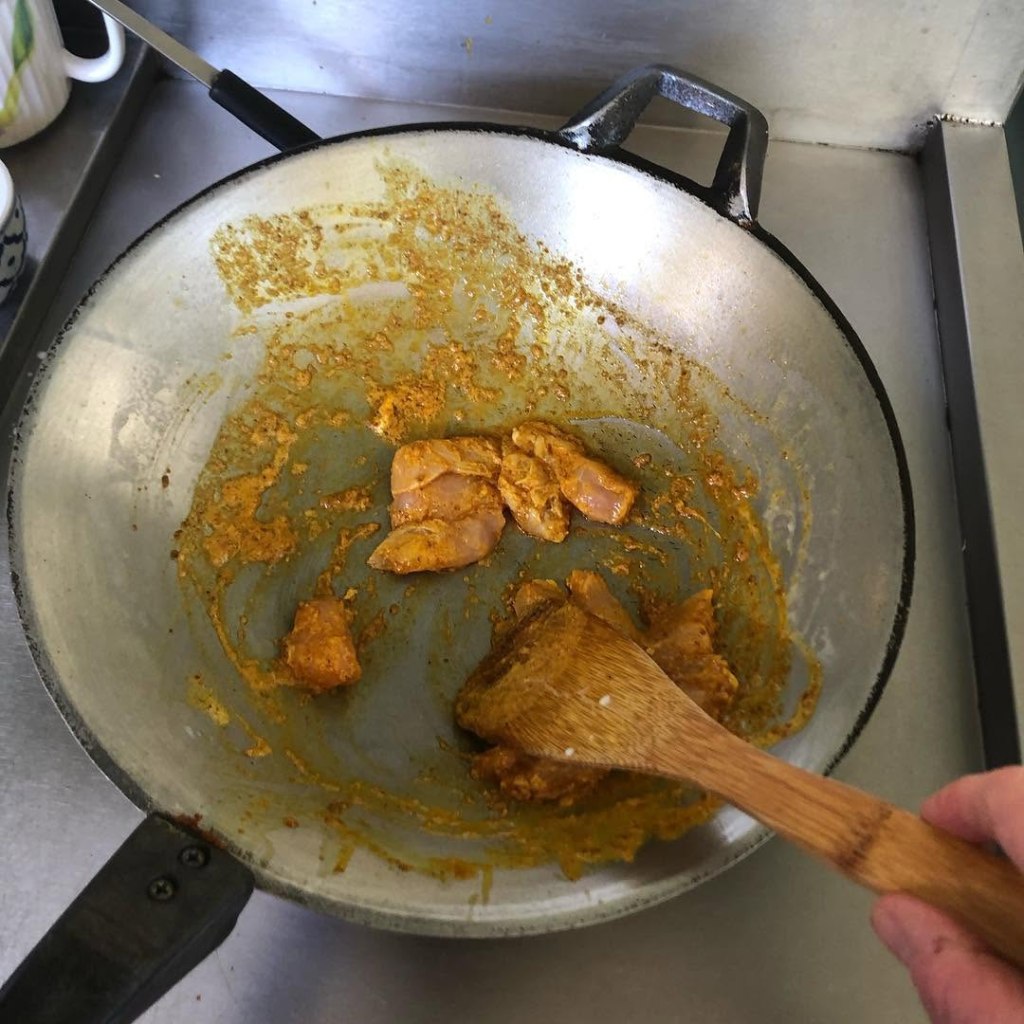
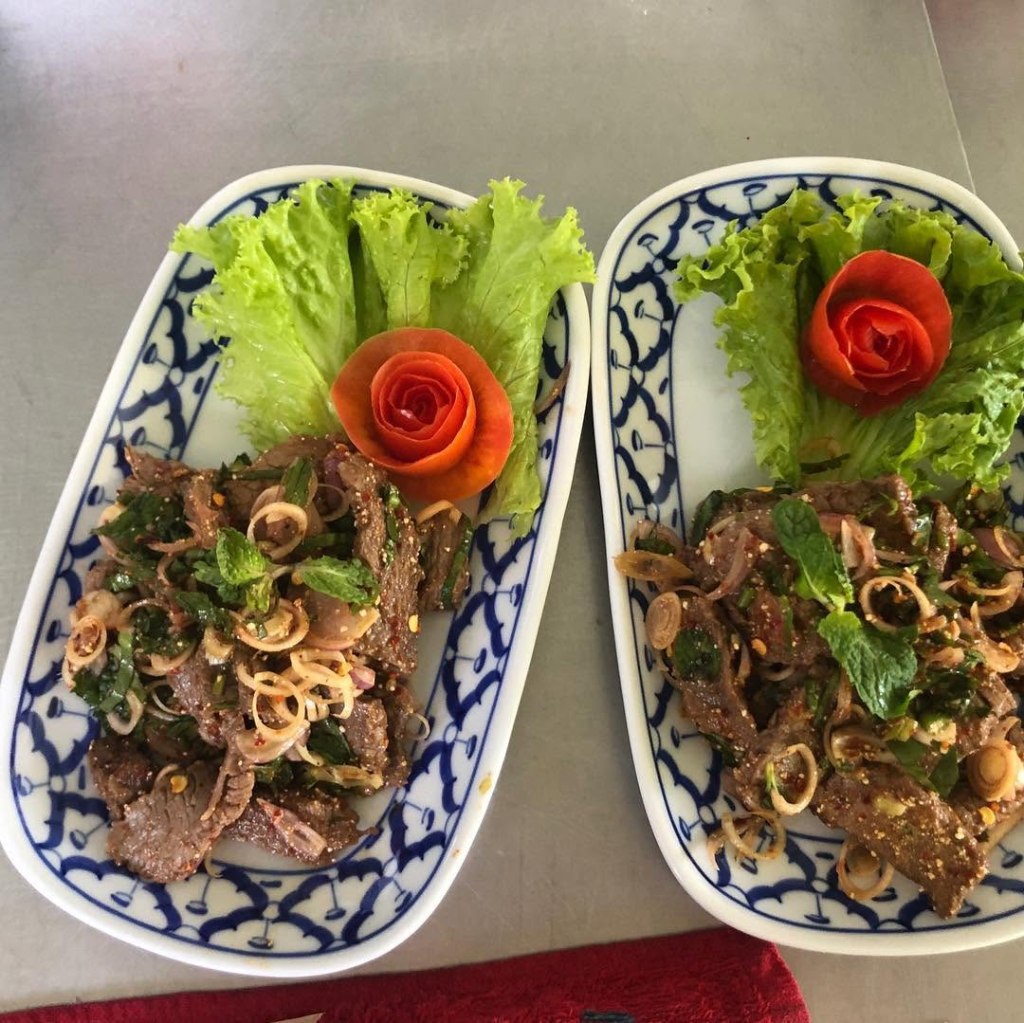
Before we began cooking, we learned about Thai curry pastes, worked with banana leaves and prepared several dishes, including a spicy grilled beef salad and the classic cucumber relish.
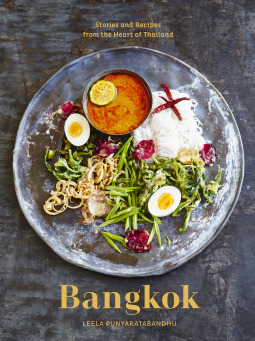
Years later, when I found a recipe for beef and cucumber curry in Bangkok: Recipes and Stories from the Heart of Thailand by Leela Punyaratabandhu, I immediately thought about that day beside the beach in Phuket.
I had never thought of combining beef and cucumber in a curry. Cucumber was something I used fresh in salads, not an ingredient I imagined simmering in coconut milk and spices. This is a dish I will revisit because it is so different from the way I normally cook.
Making the Curry
The recipe begins with a curry paste made from scratch. The ingredients include shallots, galangal, dried chiles, turmeric, cumin and coriander. Some of the ingredients are toasted first, and then everything is pounded together with a mortar and pestle.
Thai curry paste traditionally includes shrimp paste. Since I am allergic to shrimp, ugh, I had to omit it from the curry paste. I added more fish sauce as a substitute.
Making the paste takes time and effort, but it is worth it. As the ingredients break down, their aromas are released and the paste becomes dark, fragrant and full of flavor.
The curry paste is cooked with thick coconut cream before the beef and the remaining liquid are added. As the coconut cream cooks, it releases its oil and adds flavor to the curry paste.
Once again, I had to resist my instinct to season and sear the meat first. The beef goes directly into the curry without salt, pepper or browning.
I chose to trust the process.
The curry then simmers slowly until the beef is tender and the sauce has reduced. I removed the lid during the final 45 minutes so the sauce could thicken. The recipe calls for adding the onion and cucumber near the end, simmering them for two minutes and then letting the curry rest.
I was concerned that the onion would not have enough time to cook, so I added it first and let it simmer for about 10 minutes. I then added the cucumber, simmered everything for another two minutes, covered the pot and removed it from the heat. I let it rest for 15 minutes.
Before adding the cucumber, I cut it lengthwise and removed the soft center and seeds. This helped it hold its shape once it was added to the hot curry.
How It Turned Out
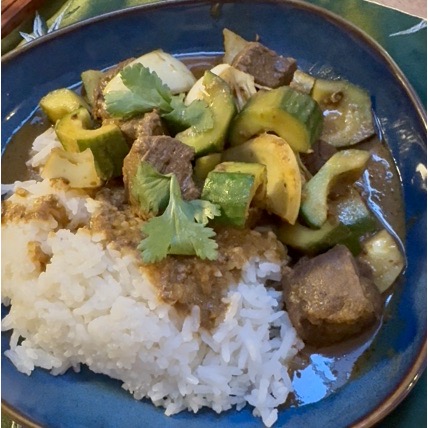
The beef was incredibly tender and flavorful. I was honestly surprised by how much flavor it developed without being seasoned or seared first.
Removing the lid for the final 45 minutes worked perfectly. The sauce reduced to the right consistency without becoming too thick. It was rich, moderately spicy and full of flavor from the cumin, coriander and galangal.
I was also happy that I added the onion before the cucumber. The onion had enough time to soften, while the cucumber stayed tender without completely disappearing into the sauce.
The cucumber surprised me. It was an unusual addition to a slow cooked beef curry, but it worked. It absorbed some of the sauce while adding a lightness that helped balance the richness of the beef and coconut milk.
Served with jasmine rice, it was comforting, flavorful and beautifully balanced. I would definitely make it again.
Thai Beef and Cucumber Curry
Serves 4
Ingredients
For the Curry Paste
- 2 teaspoons coriander seeds
- 2 teaspoons cumin seeds
- 4 whole allspice berries
- 2 tablespoons minced galangal
- 3 inches fresh turmeric, chopped
- 2 ounces shallots, diced
- 2 large dried guajillo chiles, or pasilla chiles as a substitute, chopped, soaked in warm water until softened and drained
- 1 teaspoon white peppercorns
- 3 tablespoons fish sauce
If you are lucky enough not to be allergic to shrimp, replace the 3 tablespoons of fish sauce with 2 teaspoons packed Thai shrimp paste.
For the Curry
- 1/2 cup fresh coconut cream paste
- 2 1/2 pounds boneless beef shank
- 5 tablespoons tamarind paste
- 3 tablespoons fish sauce
- 2 teaspoons finely packed palm sugar
- 1 cup coconut cream
- Water as needed
- 8 ounces onion, cut into small wedges
- 1 1/2 pounds Persian cucumbers, sliced lengthwise, seeds removed and cut into 1 inch pieces
- Thai jasmine rice, for serving
- Fresh cilantro leaves, for garnish
Method
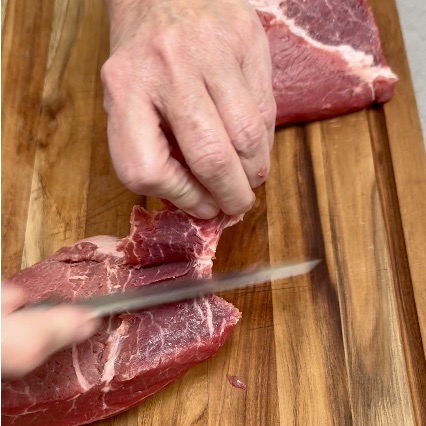
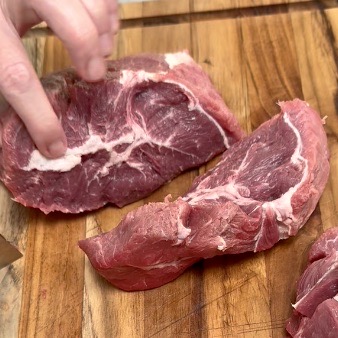
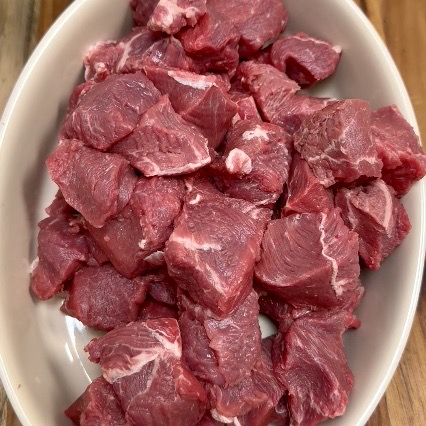
Remove any silverskin from the beef shank and cut the meat into 2 inch pieces. Remove any cartilage or tough tendons as you cut the meat. Place the beef in the refrigerator until needed.
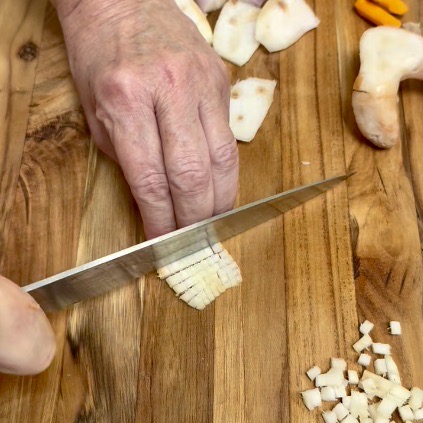
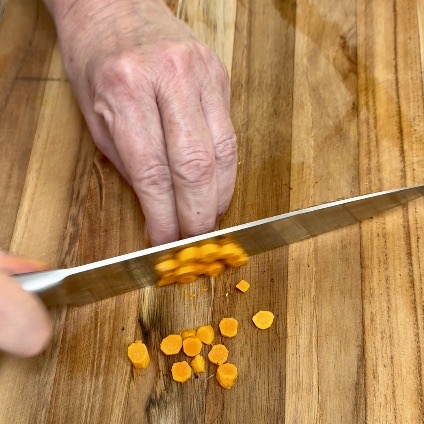
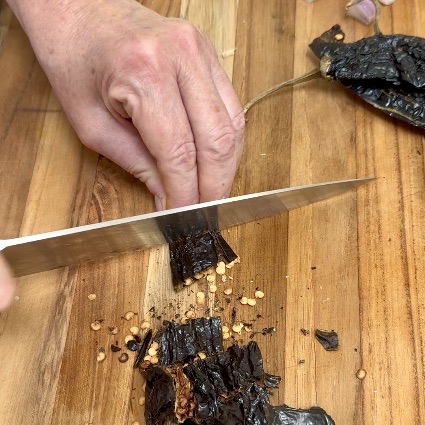
Prepare the shallots, galangal, tumeric and chili pepper. Be sure to use a small dice on the vegetables. It will make it easier to crush into a paste with the mortar and pestle.
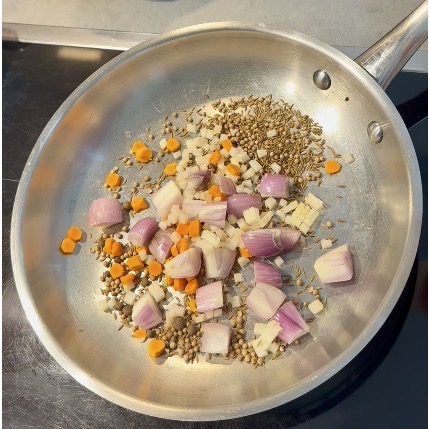
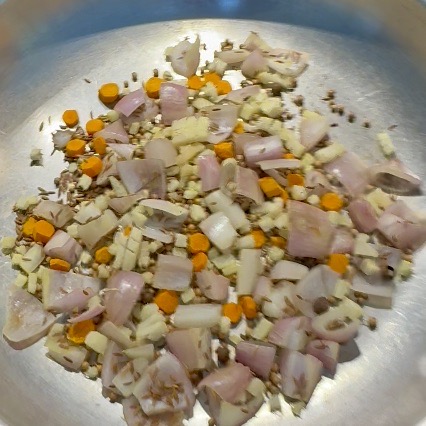
Add the coriander seeds, cumin seeds, allspice, galangal, turmeric, peppercorns, and shallots to a sauté pan. Cook over medium to medium low heat until the spices are lightly toasted and the shallots have softened.
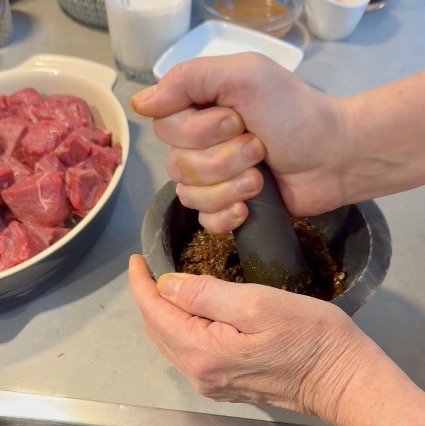
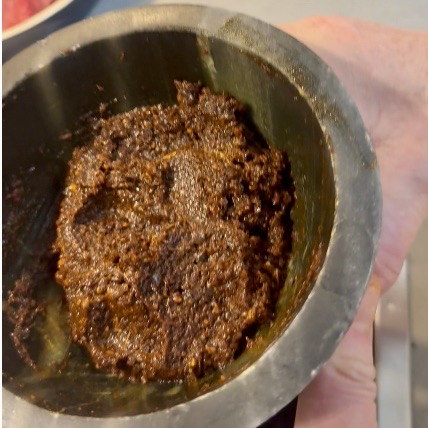
Transfer the toasted spices and vegetables to a mortar. Drain the rehydrated chiles and add them to the mortar with 3 tablespoons of fish sauce, or the shrimp paste if using. Pound everything together until it forms a paste. You can also use a food processor, but the mortar method produces a more flavorful paste with a better texture.
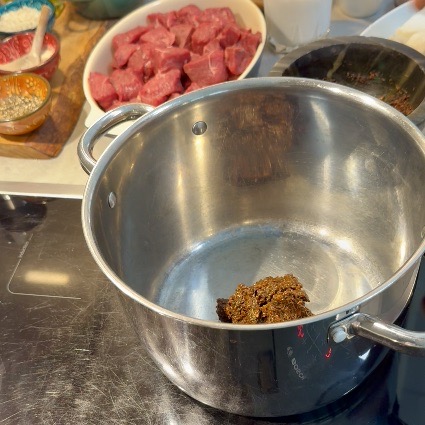
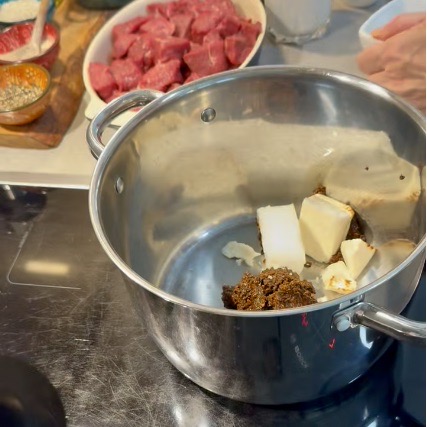
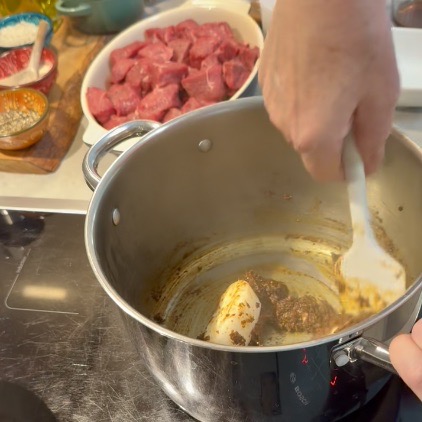
Place the curry paste and coconut cream paste in a large saucepan that is big enough to hold the beef and liquid. Cook over medium low heat until fragrant and the coconut cream paste has melted.
Add the beef, tamarind paste, remaining 3 tablespoons of fish sauce and palm sugar. Stir to combine.
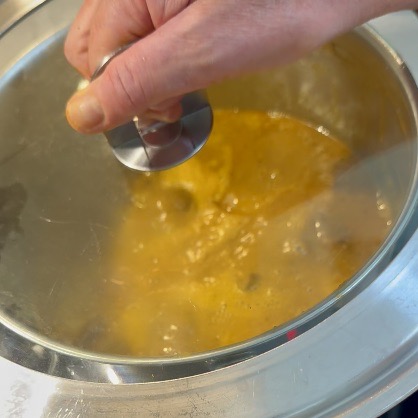
Add the coconut cream and just enough water to cover the beef. Bring the curry to a boil, cover the pot and reduce the heat to a low simmer.
Cook for 2 hours, stirring occasionally. Check the level of the liquid as the curry cooks. If the sauce is reducing too quickly, add a little water as needed. If the sauce needs to thicken, remove the lid during the final 45 minutes of cooking.
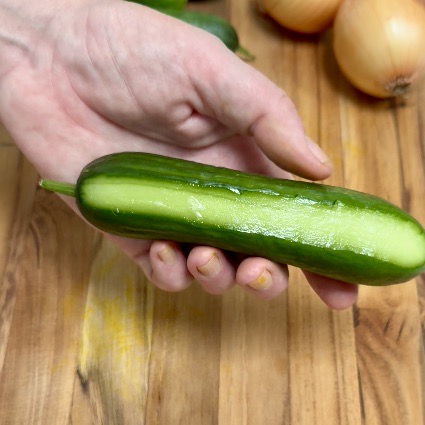
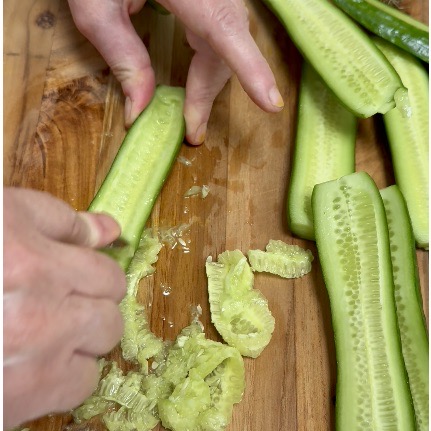
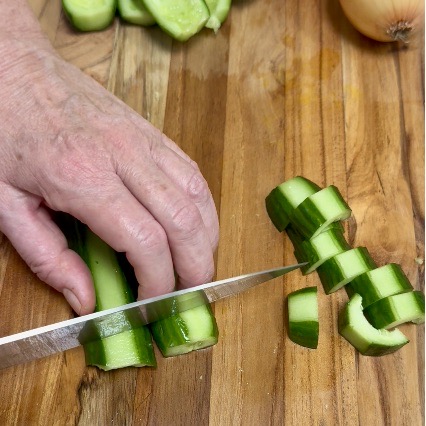
While the curry is simmering, prepare the cucumbers. With a vegetable peeler, peel off a strip of the skin on each side of the cucumbers. Slice off the ends and slice in half lenthwise. Scoop out the seeds, and cut into 1 inch pieces. Set aside with the onions.
After 1 hour and 50 minutes, add the onion and stir it into the curry. Let it simmer for the final 10 minutes of the 2 hour cooking time.
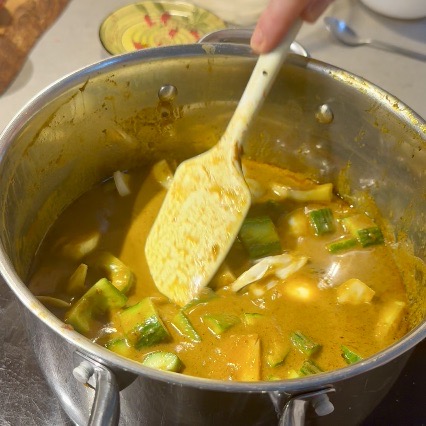
Add the cucumbers and gently push them beneath the sauce without stirring. Cover the pot and simmer for 2 minutes.
Remove the curry from the heat and let it rest, covered, for 15 minutes. This will lightly cook the cucumbers while helping them hold their shape.
Serve with Thai jasmine rice and garnish with fresh cilantro leaves. Enjoy.
From My Kitchen
- Because of my shrimp allergy, I omitted the traditional shrimp paste and added a little more fish sauce.
- I could not find dried guajillo chiles, so I substituted pasilla chiles.
- I trusted the traditional method and added the beef directly to the curry without seasoning or searing it first. The beef became incredibly tender and flavorful.
- I removed the lid for the final 45 minutes of cooking. This allowed the sauce to reduce to the right consistency without becoming too thick.
- I added the onion first and let it simmer for about 10 minutes. I then added the cucumber, simmered everything for two minutes, covered the pot and let the curry rest off the heat for 15 minutes.
- I cut the cucumber lengthwise and removed the soft center and seeds. This helped it hold its shape in the curry.
- The cucumber softened and absorbed the sauce while adding a lightness that balanced the rich beef and coconut milk.
- This recipe brought back memories of cooking beside the beach in Phuket while also making me reconsider some of the habits I have developed in my own kitchen.
 Liz 'N Lux