A few years ago Paul and I spent a week in Porto, Portugal. It is one of my favourite cities to visit. I know… I say that a lot. But Porto is different. It has its own personality.



The buildings are old and weathered. Paint peels. Stone has been worn smooth by centuries of people walking the same streets. Nothing feels polished or perfect, and that’s exactly what I love about Porto. It feels lived in.
The people make the city come alive. Everywhere we went we were welcomed with a smile, and before long Porto felt like somewhere we’d happily return.



One afternoon we joined a private street art walking tour, and it turned out to be one of the highlights of our trip. We wandered through neighbourhoods we never would have found on our own and discovered another side of the city.



Most evenings we simply wandered, watching the sun set over the Douro River before finding another little restaurant for dinner.
The food…it was amazing.
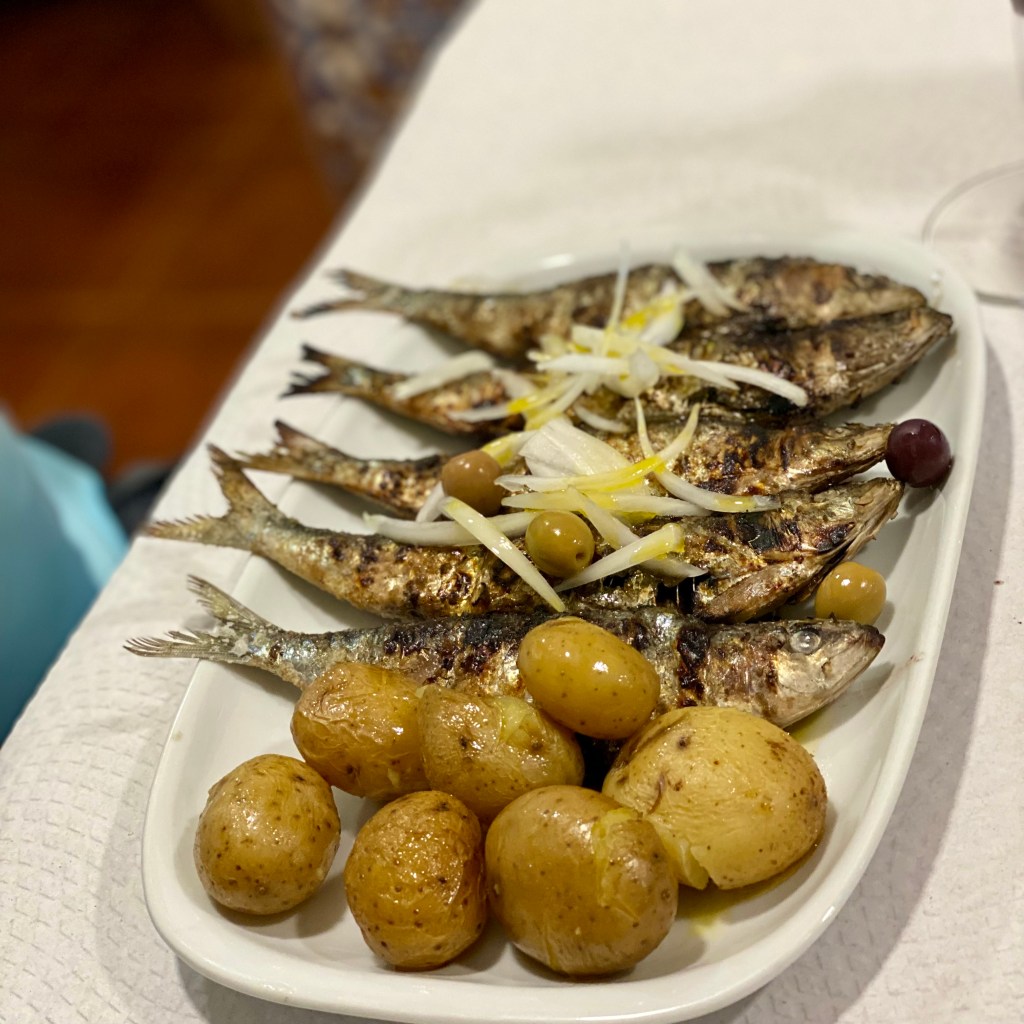
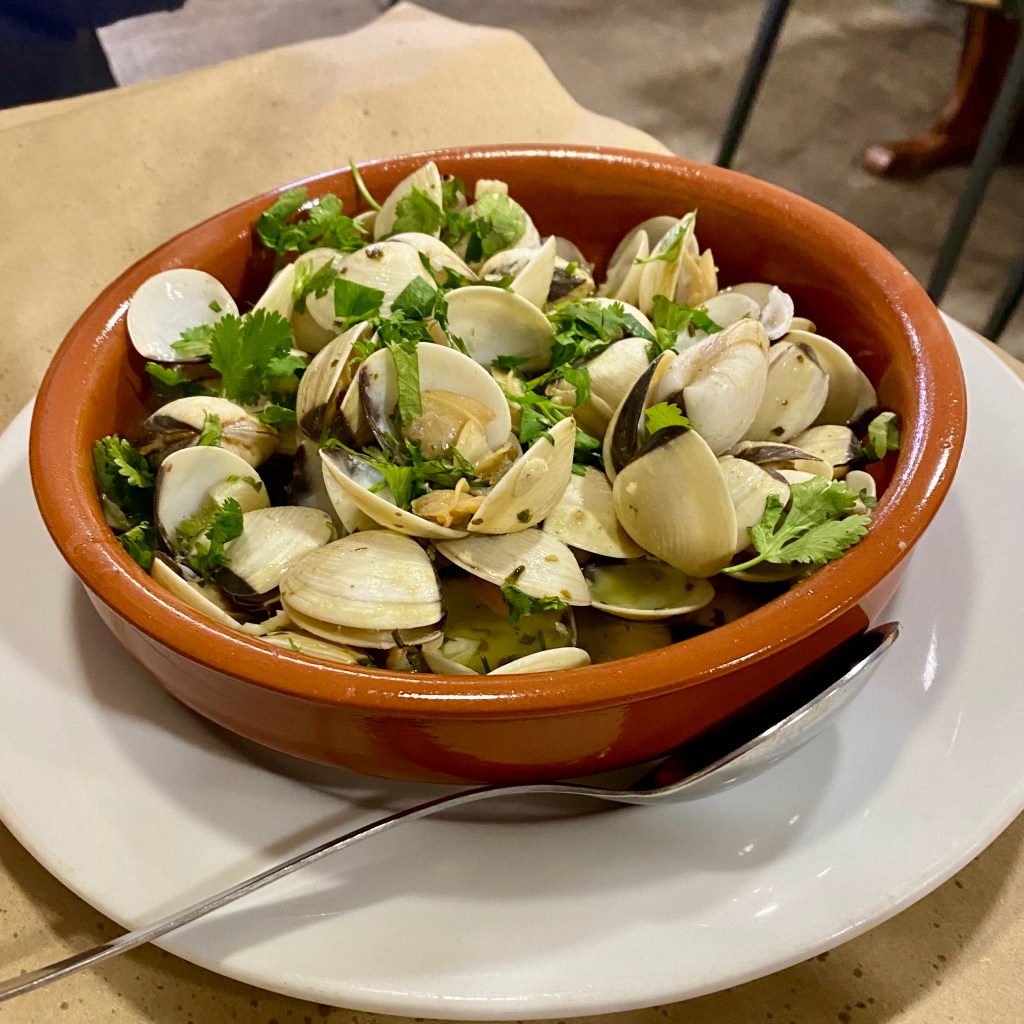
Fresh fish. Fresh seafood. Traditional dishes made with simple ingredients. The seafood was always the star, and every meal reminded me just how connected Portuguese cooking is to the sea.
For my return to Portugal through memory, I pulled Portugal: The Best Fish in the World from my Cookbook Shelf.


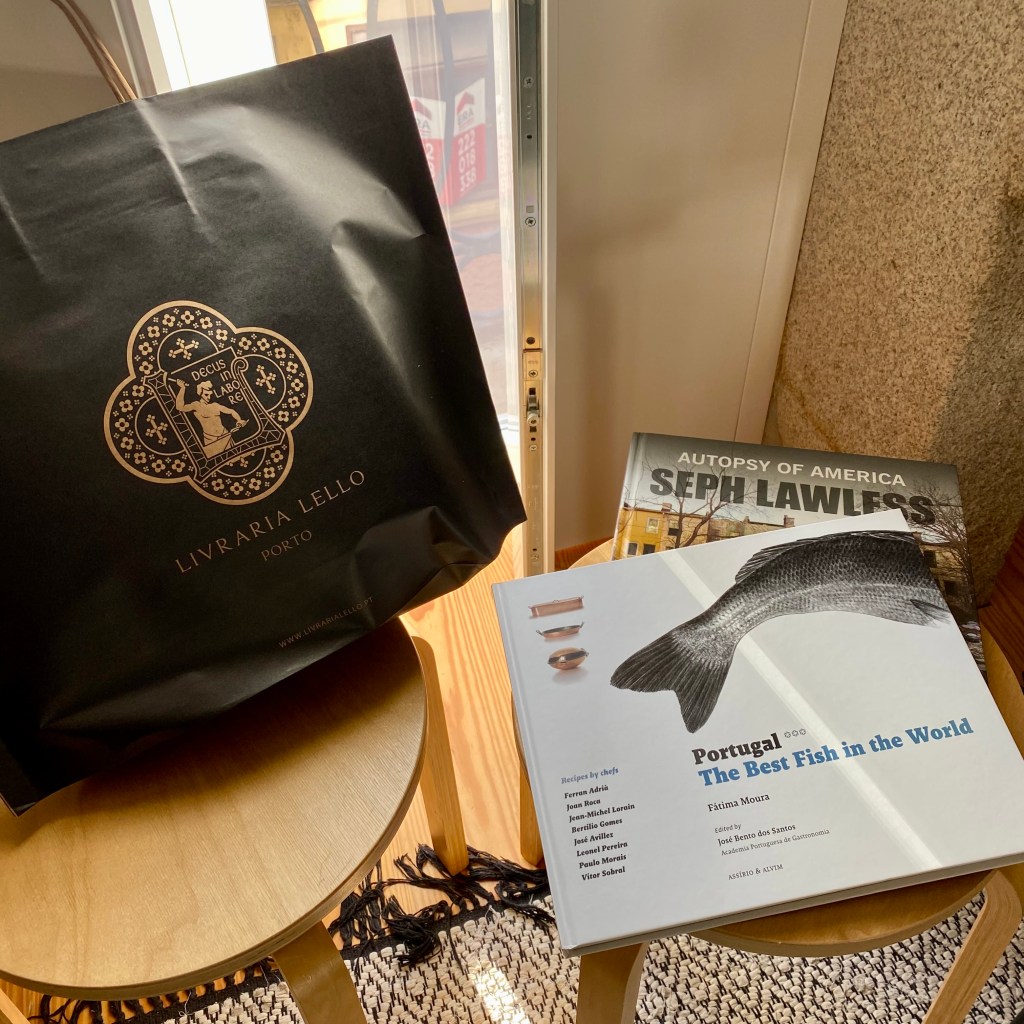
I bought the cookbook at Livraria Lello, one of the most beautiful bookstores I’ve ever visited. I could have spent hours wandering through its rooms, browsing the shelves and admiring the architecture. It felt like the perfect place to buy a cookbook that would eventually bring Portugal back into my kitchen.
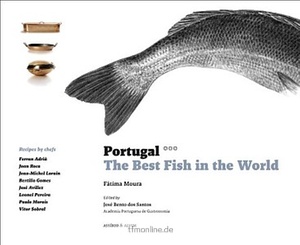
The book features recipes from some of Portugal’s best chefs, each sharing a favourite way to prepare the country’s incredible fish and seafood.
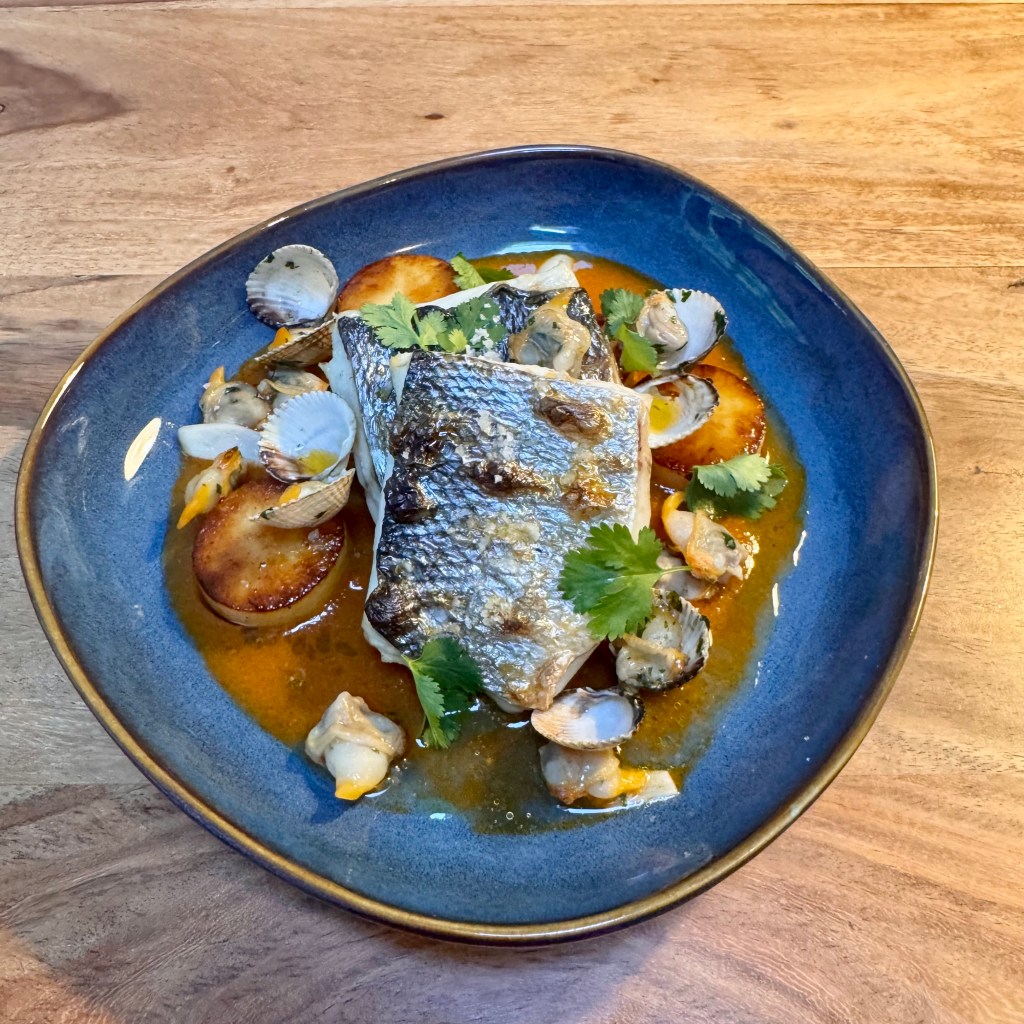
I chose Stone Bass with Clams by José Avillez because it reminded me of everything I loved about eating in Porto. Fresh fish. Fresh clams. Simple ingredients. Nothing fussy. Just letting the seafood shine.
I couldn’t find stone bass, so I bought a whole bar de ligne instead and filleted it myself. Honestly, that became part of the fun.
What really caught my attention was the sauce.
Instead of making a traditional fish stock, the recipe has you roast the fish head and bones with tomatoes, onions, garlic, and chorizo before turning everything into a tomato sauce. I’d never made a sauce that way before. The roasted vegetables added sweetness while the fish gave the sauce that unmistakable taste of the sea. It was one of those techniques that made me stop and think, why haven’t I done this before?
Another thing I appreciated was that much of the recipe could be prepared ahead of time. I filleted the fish and made the sauce earlier in the day, so when it came time for dinner all that was left was cooking the potatoes, steaming the clams, and finishing the fish. It’s the kind of recipe that’s perfect for entertaining because most of the work is already done.
Then there were the potatoes.
They may have been my favourite surprise.
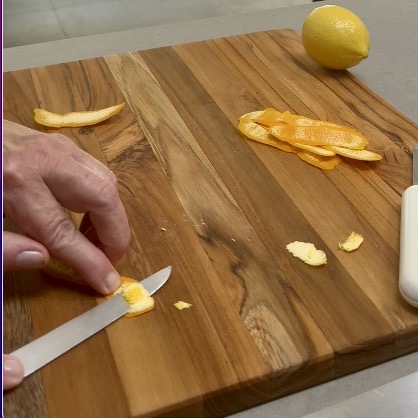
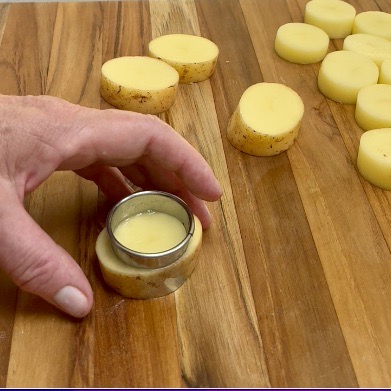
They’re gently cooked in olive oil with herbs and strips of orange and lemon zest. Citrus never appears anywhere else in the recipe, but somehow those potatoes brighten the whole dish. They soak up all that infused oil and pair beautifully with the fish and clams. Such a simple idea. I’ll definitely be making potatoes this way again.
The recipe called for cooking the fish sous vide.
I don’t own a sous vide machine… yet.
So I improvised.
I sealed the fish in freezer zip-top bags, heated a pot of water to 54°C, and stood there with my instant-read thermometer, keeping the temperature where it needed to be.
I wasn’t sure it was going to work.
When I cut into the fish, I was pleasantly surprised. It was beautifully tender, moist, and cooked just the way I had hoped.
I have to admit, I was pretty pleased with how it turned out.
I’ve always thought of myself as a little old-school when it comes to cooking, but after making this recipe, I can definitely see a sous vide machine finding its way into my kitchen one day.
The finished dish was everything I hoped it would be.
The fish was delicate. The roasted tomato sauce tasted of both the sea and the vegetables. The clams added their own sweetness, and those citrusy potatoes brought just enough heartiness to make the whole meal feel complete.
Cooking this recipe brought Porto back into my kitchen for an evening.
That’s one of the things I love most about my Cookbook Shelf. Every recipe lets me travel back to a place I’ve loved. I remember the people, the meals, and almost always learn something new along the way.
Food really does connect us all.
Bar de Ligne with Clams
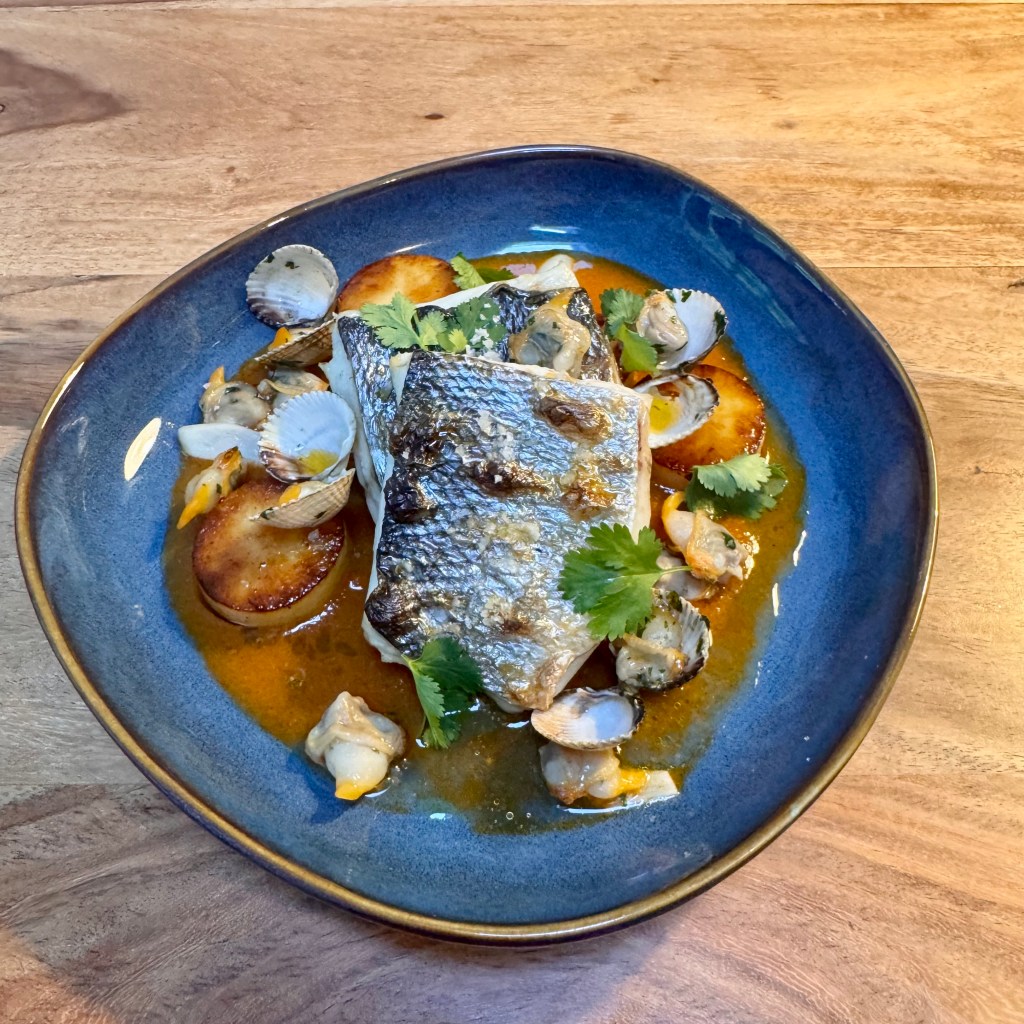
Adapted from Portugal: The Best Fish in the World by Fátima Moura
Recipe by José Avillez
Serves 2
The Fish
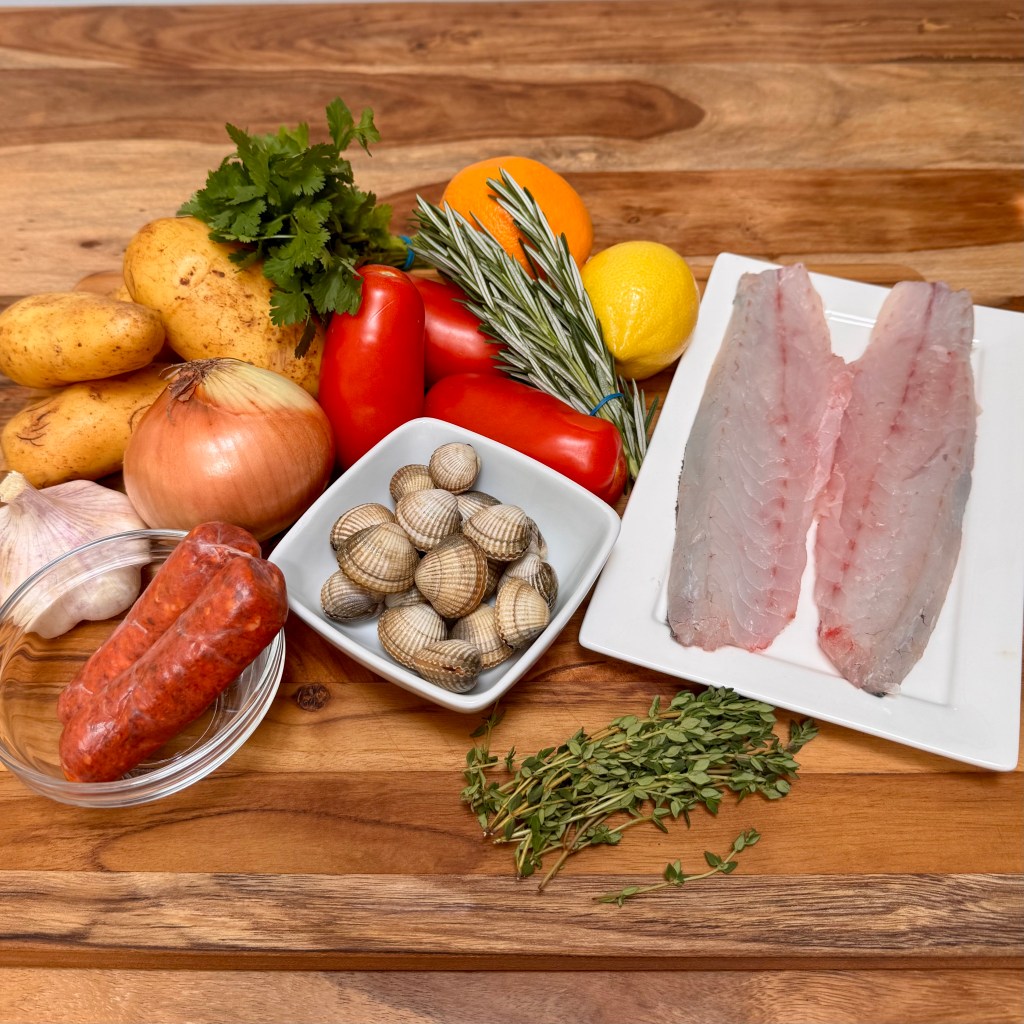
Ingredients
1 whole bar de ligne (about 2 kg), gutted, scaled and filleted
Reserved citrus-infused olive oil
Method
Fillet the fish, leaving the skin on. Cut the fillets into 3-inch (7–8 cm) portions and refrigerate until ready to cook.
While the sauce, potatoes, and clams are finishing, bring a pot of water to 54°C.
Place the fish into freezer zip-top bags with a drizzle of the reserved citrus-infused olive oil. Seal the bags well, removing as much air as possible.
Cook the fish in the water bath for about 15 minutes, using an instant-read thermometer to keep the water at temperature.
Remove the fish from the bags and place it flesh-side down on a parchment-lined baking sheet. Broil until the skin is crisp.
Roasted Tomato Fish Sauce
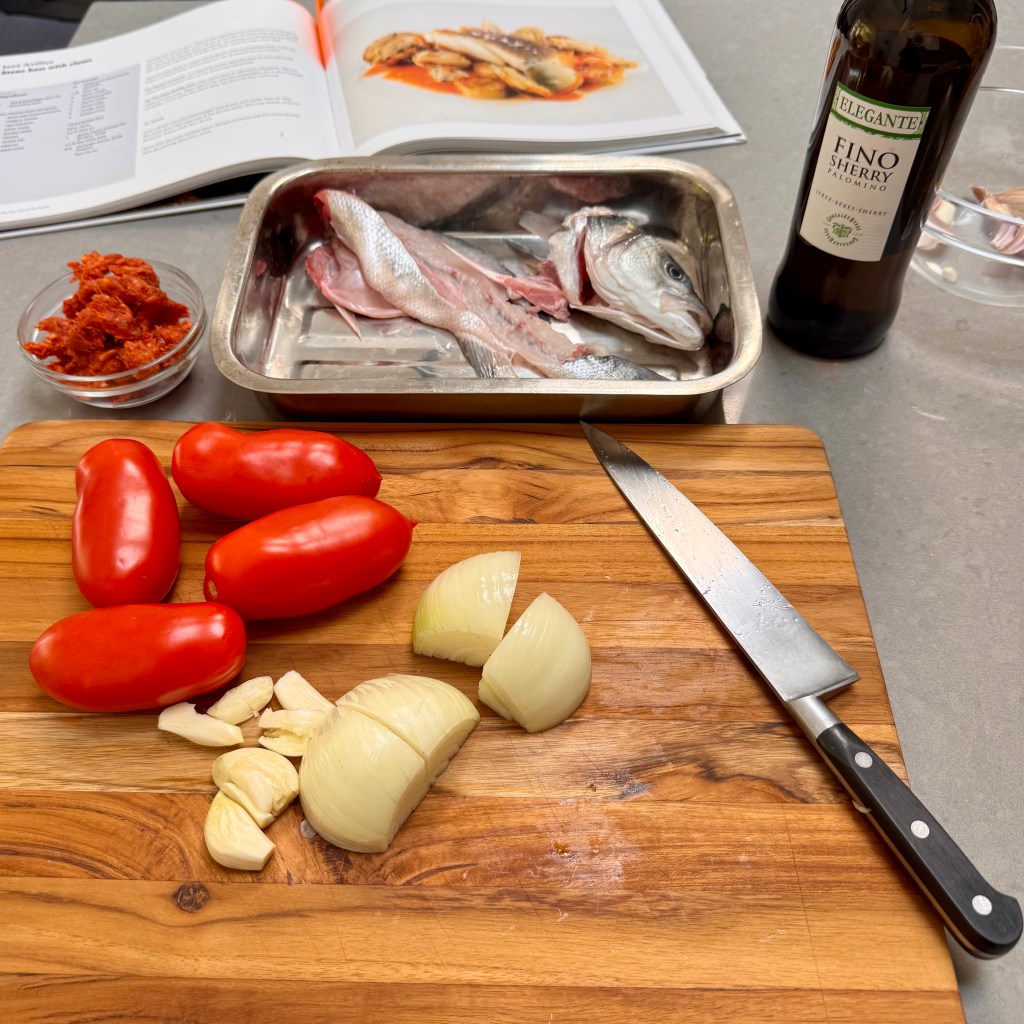
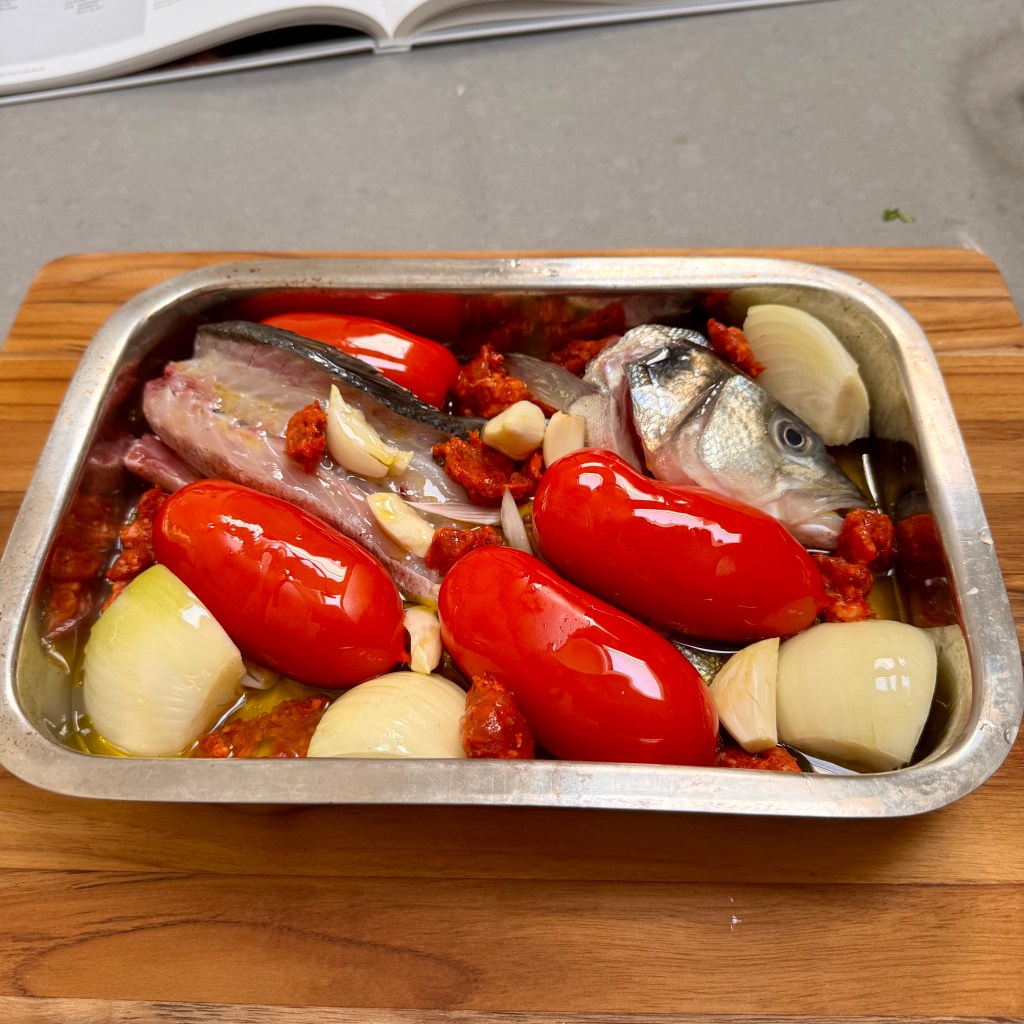
Ingredients
Head and bones from the fish
1 large onion, quartered
4 plum tomatoes
4 garlic cloves, crushed
2 fresh chorizo sausages, casing removed and crumbled
½ teaspoon coarse salt
1 cup olive oil
½ cup dry sherry
Method
Place all of the ingredients in a roasting pan.
Roast at 204°C (400°F) for 20–30 minutes, or until the vegetables are tender and the sherry has evaporated.
Remove and discard the fish head and bones. Allow everything to cool for about 15 minutes.
Reserve about ½ cup of the infused olive oil.
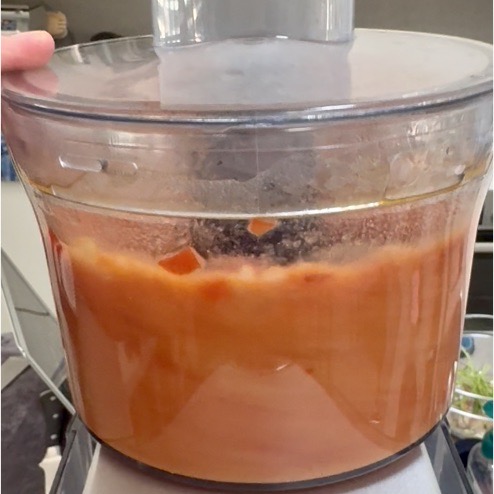
Transfer the vegetables to a food processor and purée until smooth.
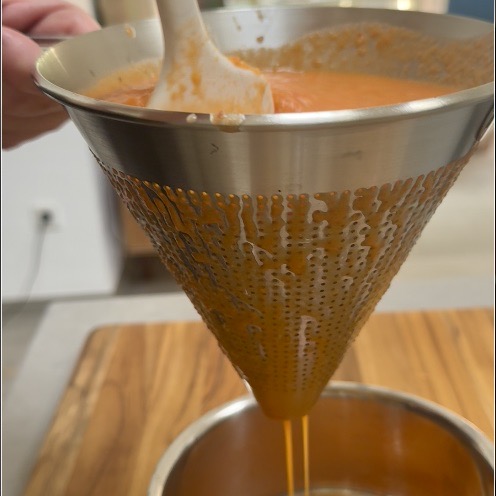
Pass the sauce through a fine sieve into a saucepan and gently simmer until slightly thickened.
Citrus Potatoes
Ingredients
3–4 new potatoes
Zest of 1 orange, cut into strips
Zest of 1 lemon, cut into strips
3 garlic cloves, crushed
1 sprig rosemary
1 sprig thyme
Olive oil
Salt
1 teaspoon whole peppercorns
Method
Heat enough olive oil to generously coat the bottom of a sauté pan.
Add the potatoes, citrus zest, garlic, rosemary, thyme, peppercorns, and a light sprinkle of salt.
Cook over medium heat, turning occasionally, until the potatoes are browned on all sides and tender.
Reserve a little of the citrus-infused oil for finishing the dish.
Clams
Ingredients
500 g fresh clams
Olive oil
3 garlic cloves, thinly sliced
½ cup dry sherry
½ cup chopped cilantro
Method
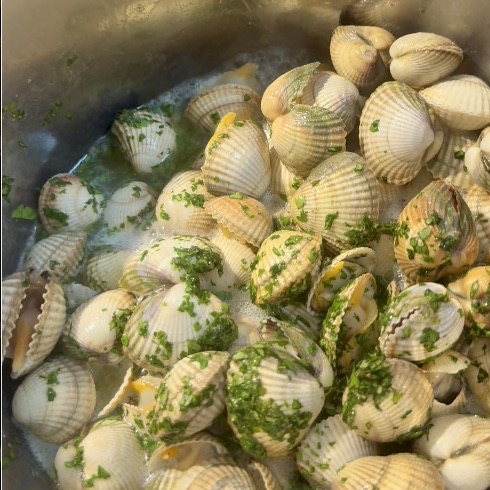
Rinse the clams well to remove any sand.
Heat a little olive oil in a saucepan. Add the garlic and cook until fragrant.
Add the clams and the sherry. Once the sherry begins to reduce, stir in the cilantro and cover the pan.
Cook for 3–5 minutes, or until the clams open.
Remove most of the clams from their shells, leaving about eight in their shells for garnish.
Bringing it Together
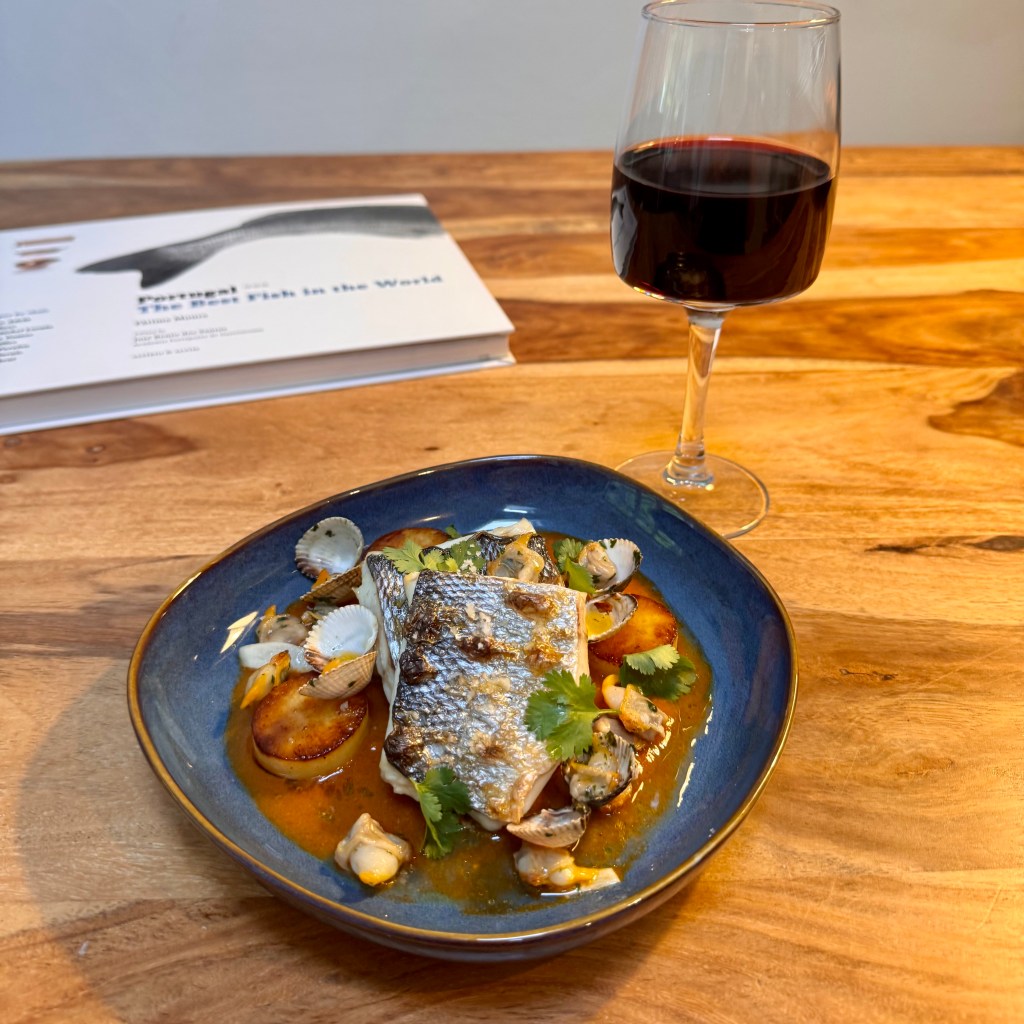
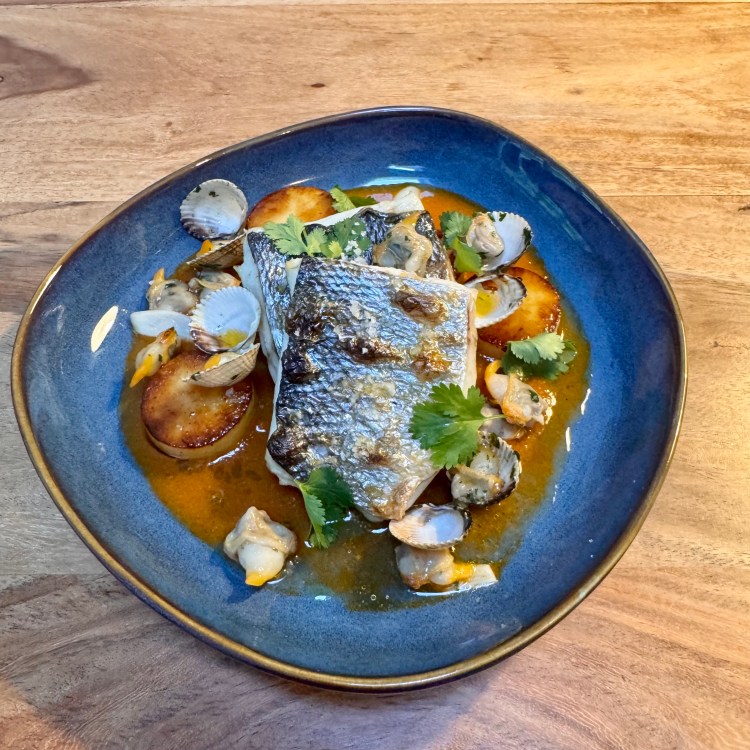
Spread the roasted tomato sauce onto each plate.
Arrange the fish over the sauce, followed by the potatoes and clams.
Garnish with the reserved clams in their shells, drizzle with the reserved citrus-infused olive oil, and finish with fresh cilantro leaves.
From My Kitchen
- I substituted bar de ligne for stone bass. It worked beautifully.
- Roasting the fish head and bones instead of making a traditional fish stock created one of the most flavourful seafood sauces I’ve ever made.
- The citrus potatoes were the biggest surprise. I’ll definitely use that technique again with other fish dishes.
- I don’t own a sous vide machine, so I improvised with freezer zip-top bags and a carefully monitored 54°C water bath. I was pretty pleased with how it turned out.
- Much of this recipe can be made ahead. I filleted the fish and made the sauce earlier in the day. Next time I’d make the sauce the day before.
- This is a wonderful dinner for guests. Finish the potatoes, clams, and fish just before serving.
- Will I make it again? Absolutely. It brought Porto back into my kitchen and taught me a few new techniques along the way.
 Liz 'N Lux