
Inspired by The Roads to Rome by Jarrett Wrisley & Paolo Vitaletti
I have a soft spot for Italy.
So far I’ve explored Milan, Florence, Lucca, Pisa, Siena, and Rome, and every visit leaves me wanting to go back. The landscapes of northern and central Italy always remind me a little of the Pacific Northwest, where I lived before moving to Luxembourg. Rolling hills, winding roads, vineyards, forests…it’s a place that feels both familiar and completely different at the same time.
If you ask me the best way to experience Italy, I’d say rent a car. Some of my favorite memories are simply driving through Tuscany.
For my 60th birthday, Paul and I finally made it to Rome.
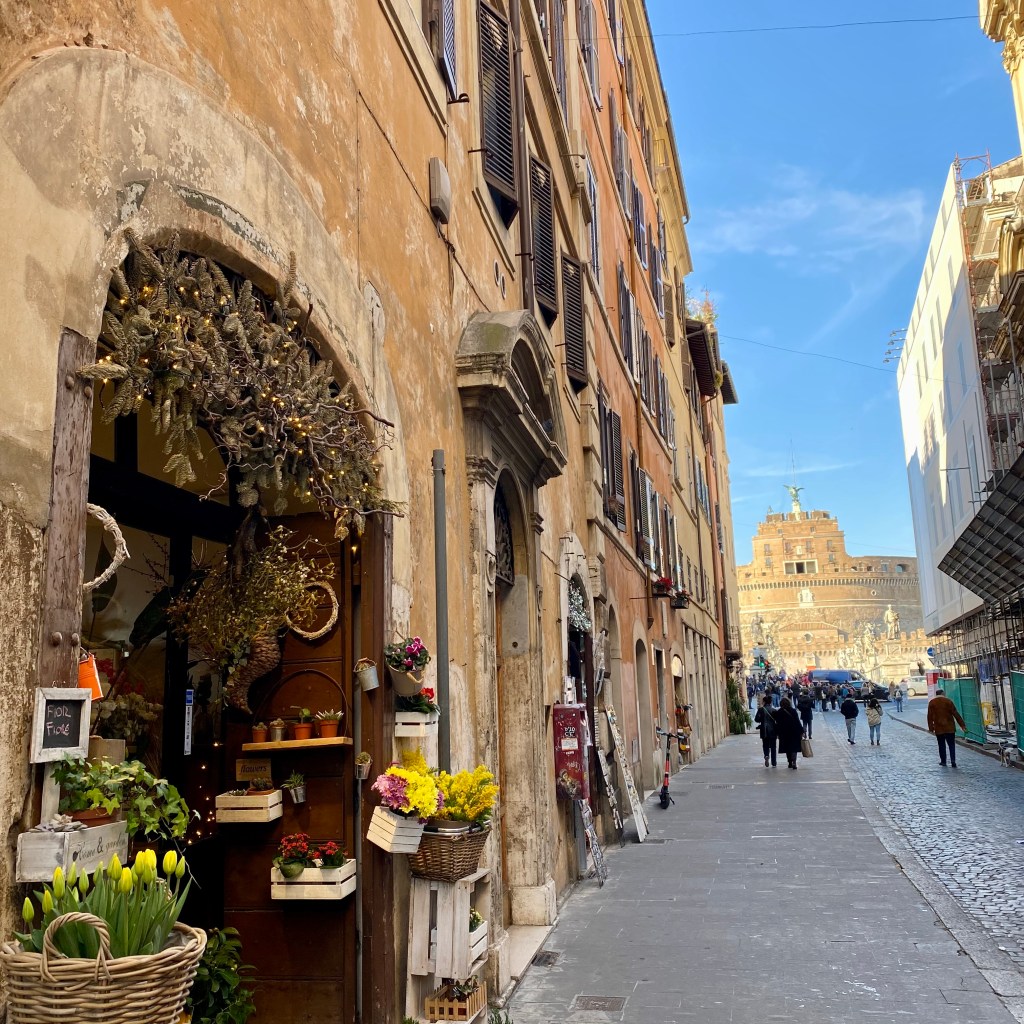
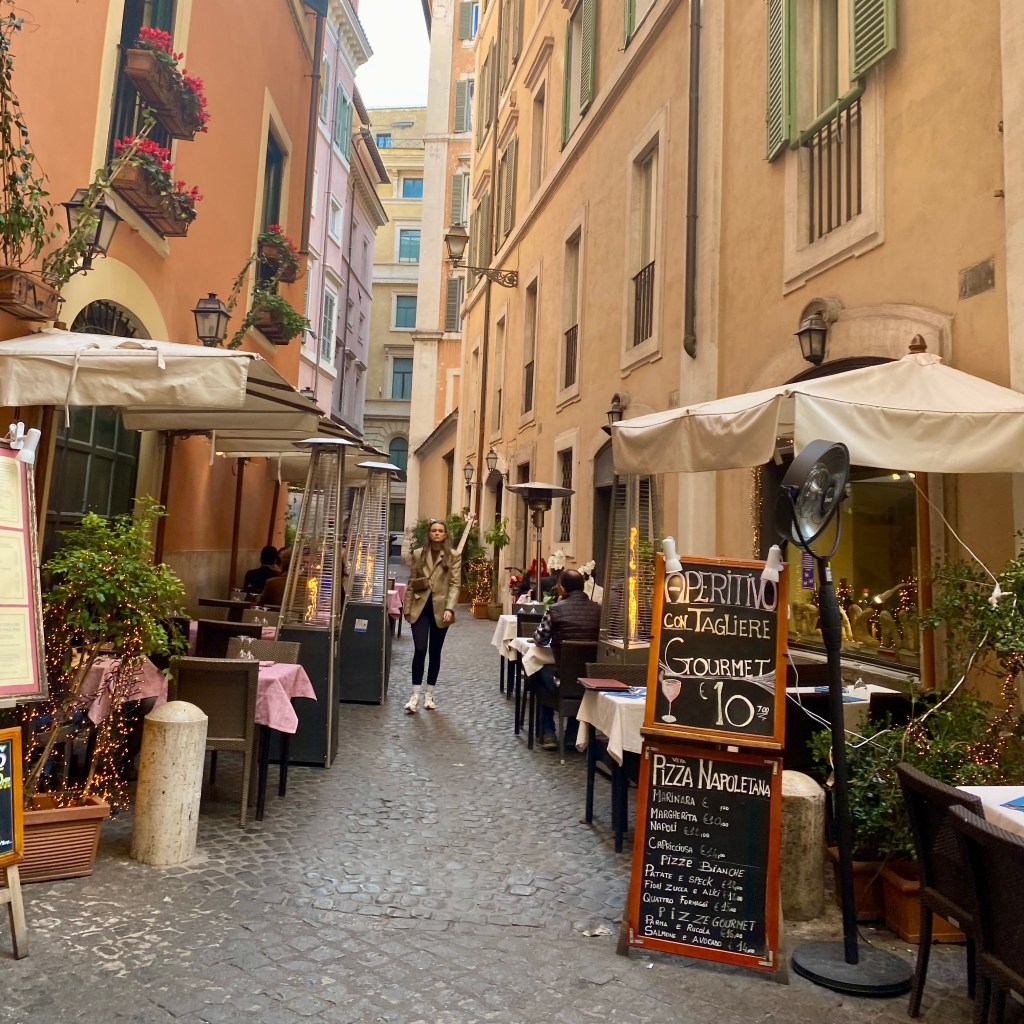
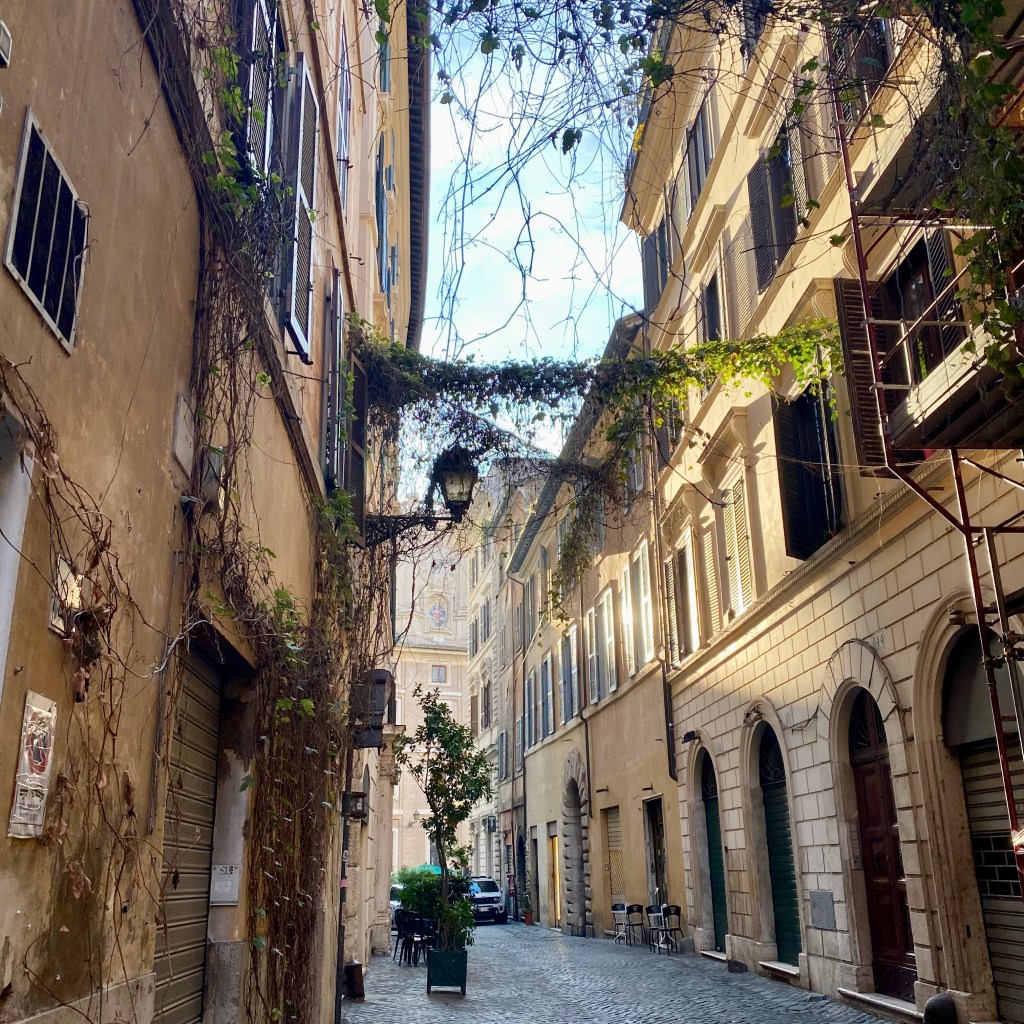
We stayed in the Monti neighborhood, which quickly became one of my favorite parts of the city. It is one of Rome’s historic neighborhoods and has an eclectic, lived-in feel with boutique shops, little wine bars, family-run restaurants, and streets made for wandering. Of course we visited the Vatican, the Colosseum, the Trevi Fountain, and even the Bocca della Verità, but some of my favorite moments happened in between. Walking streets that have existed for centuries was awe-inspiring and irresistible.
Whenever I travel, there are two places I always try to find: a market and a bookstore.
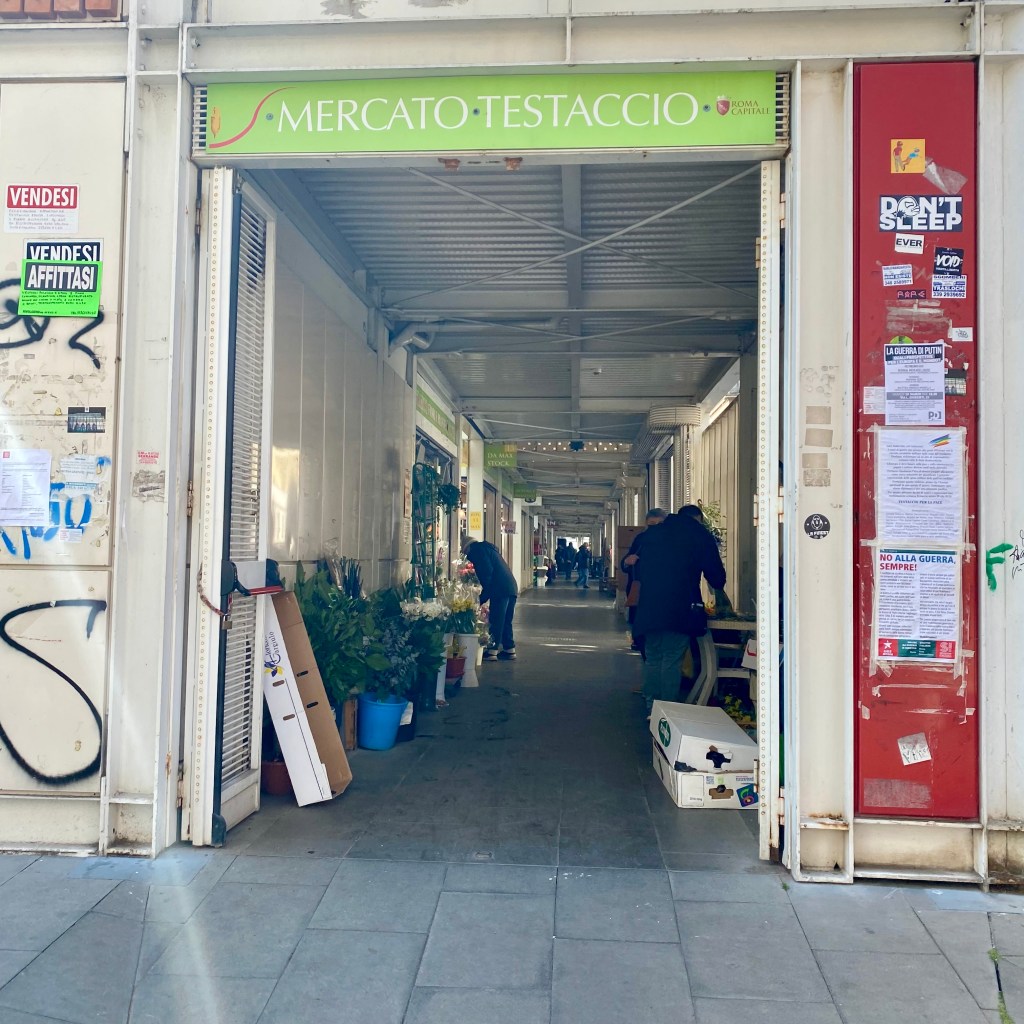
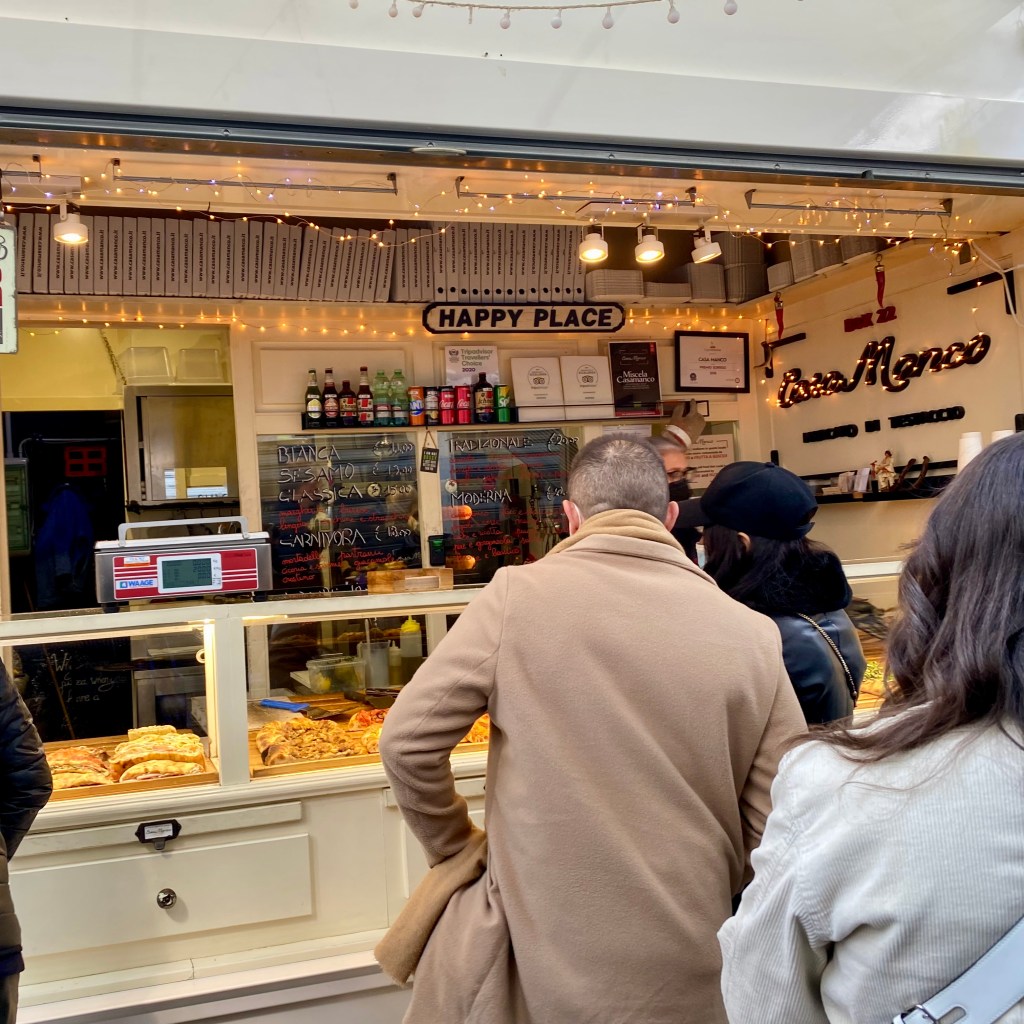
In Rome, that meant Mercato Testaccio.
Markets have become one of the threads that tie my travels together. Every one is different, but they’re all full of life. Vendors greeting regular customers, stalls filled with local produce, cheeses, meats, spices, handmade goods, and food that begs you to stop and eat.
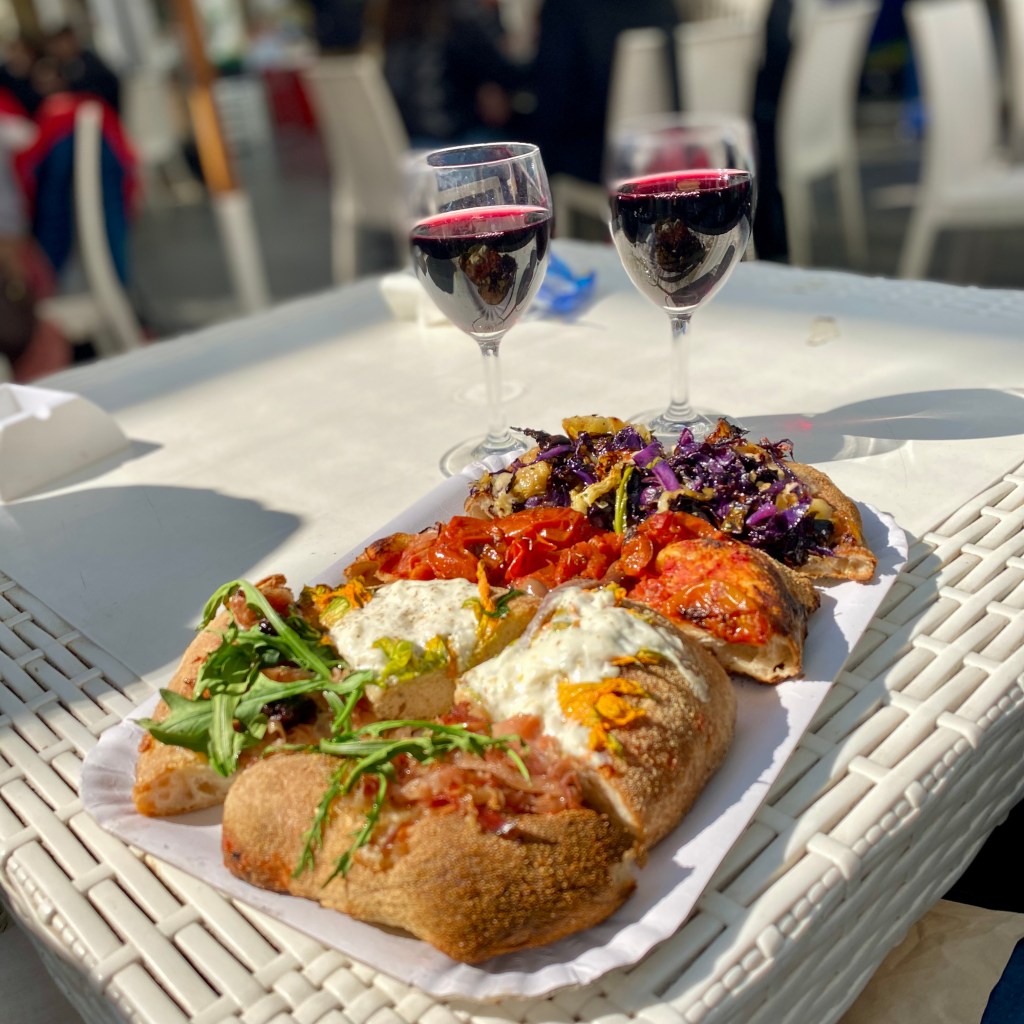
We wandered through the market, bought a few handmade leather bags from Massimo at Il Baratto that became Christmas gifts for family, and eventually settled on Casa Manco. Pizza by the slice, a glass of wine, warm sunshine, and people watching from an outdoor table.
Although it’s just one memory, that simple meal has stayed with me. That’s the gift of a market. People sharing their craft or their food, creating moments of fulfillment that become memories for a lifetime.


The other stop was Open Door Bookstore, where I found The Roads to Rome by Jarrett Wrisley and Paolo Vitaletti. It’s more than a cookbook. It’s filled with stories of the city, its neighborhoods, and the people behind the food, making it exactly the kind of cookbook I love bringing home from my travels.
While we were in Rome, and really, everywhere we travel, we leaned toward traditional restaurants, often run by local families, rather than fine dining. That’s usually how we travel. I certainly enjoy a fine dining experience every now and then, but what I’m really looking for is everyday life. The places locals gather, the food families have been making for generations, and the feeling that you’ve stepped into someone’s neighborhood.
One evening we found exactly that at La Taverna dei Fori Imperiali in Monti.

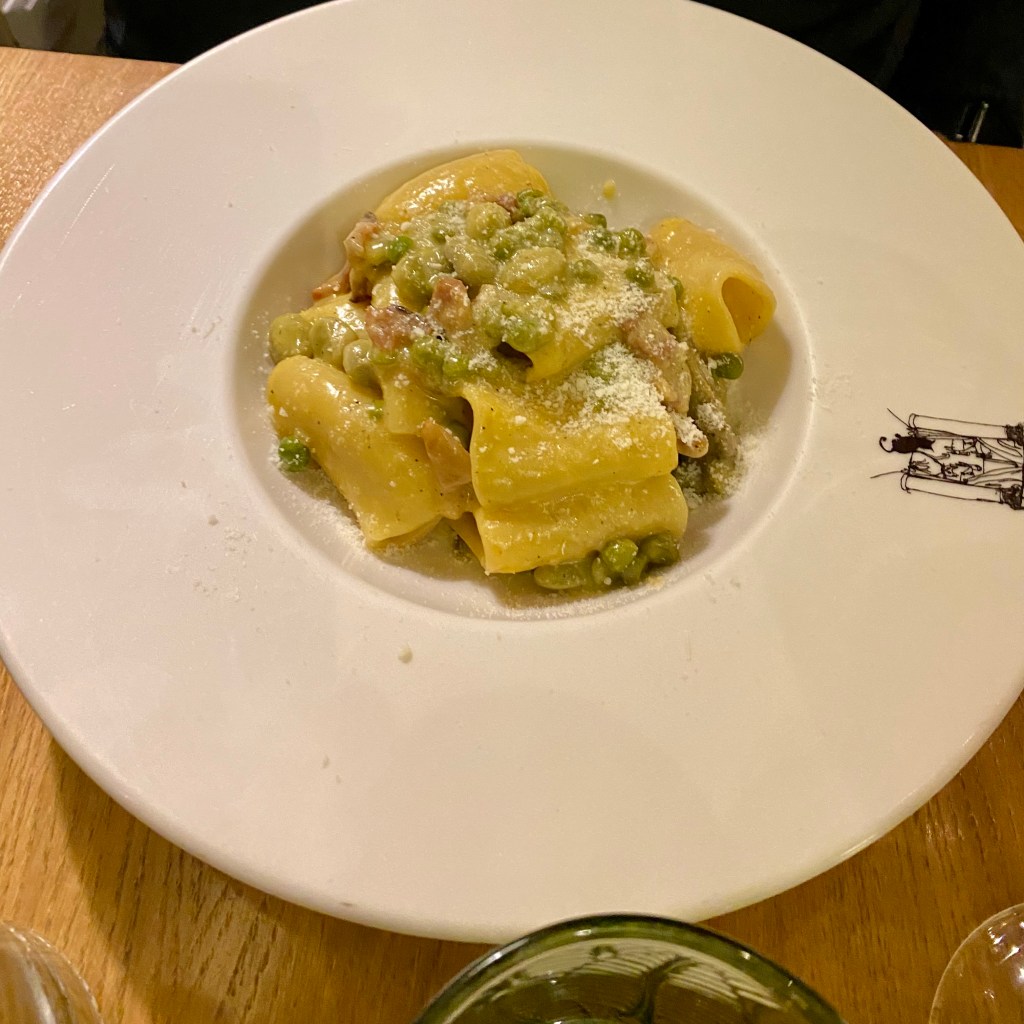
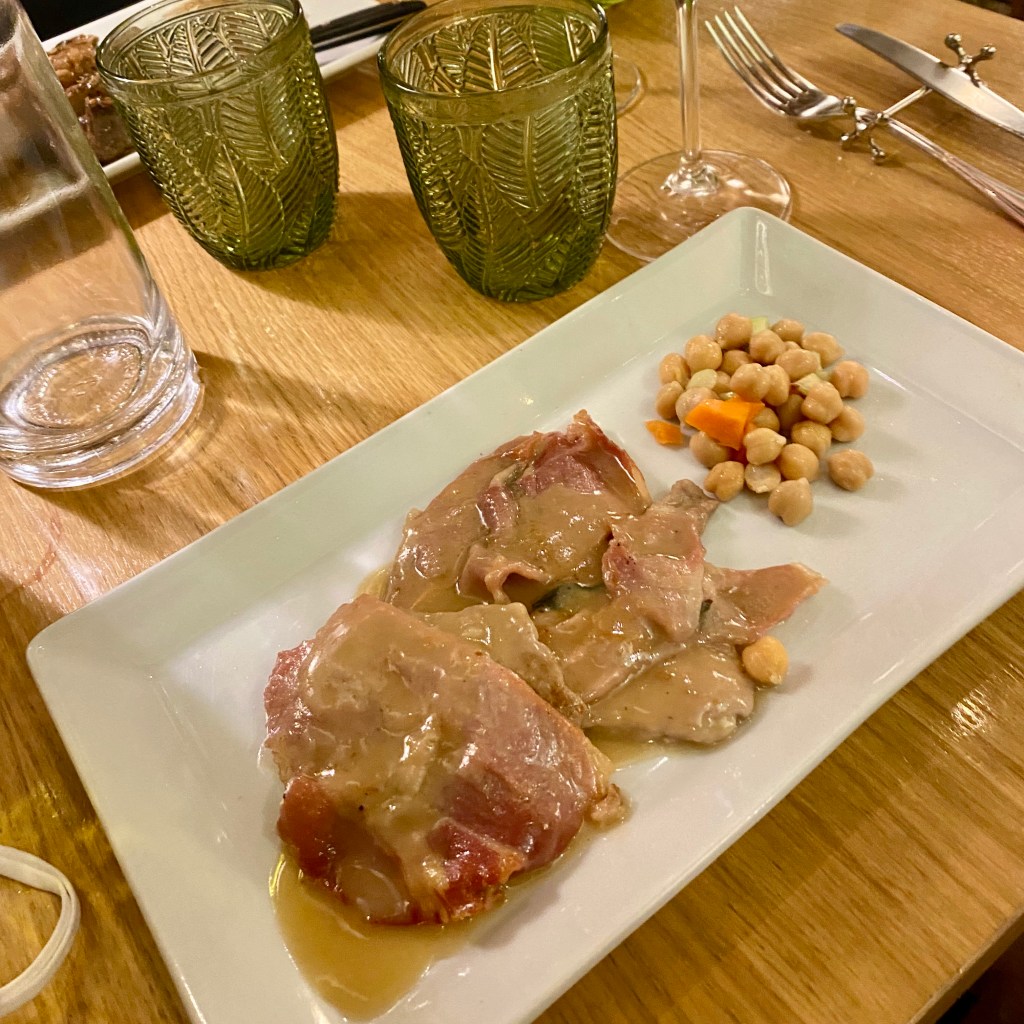
We shared Jewish-style artichokes, Carbonara Vignarola, Cacio e Pepe, grilled lamb, veal saltimbocca, and the dessert of the day. By the end of dinner we were completely stuffed, wonderfully happy, and somehow felt as though we’d been welcomed into someone’s home.
When it came time to cook from The Roads to Rome, Pappardelle al Ragù d’Anatra immediately caught my eye.
I’ve always loved pappardelle. Those wide ribbons are perfect for hearty ragùs, and the addition of fresh fava beans reminded me just a little of the Carbonara Vignarola we had enjoyed in Rome. I also rarely cook duck this way. Usually I’m searing duck breasts and serving them medium-rare, so slowly transforming them into a rich ragù sounded like something worth trying.
Making the dish taught me a few things.
The pasta dough recipe in the cookbook didn’t quite work for me. The ratio of eggs to flour felt off, so I went back to my trusted fresh pasta recipe using a combination of Tipo “00” flour and semolina with whole eggs and extra yolks. It came together beautifully.
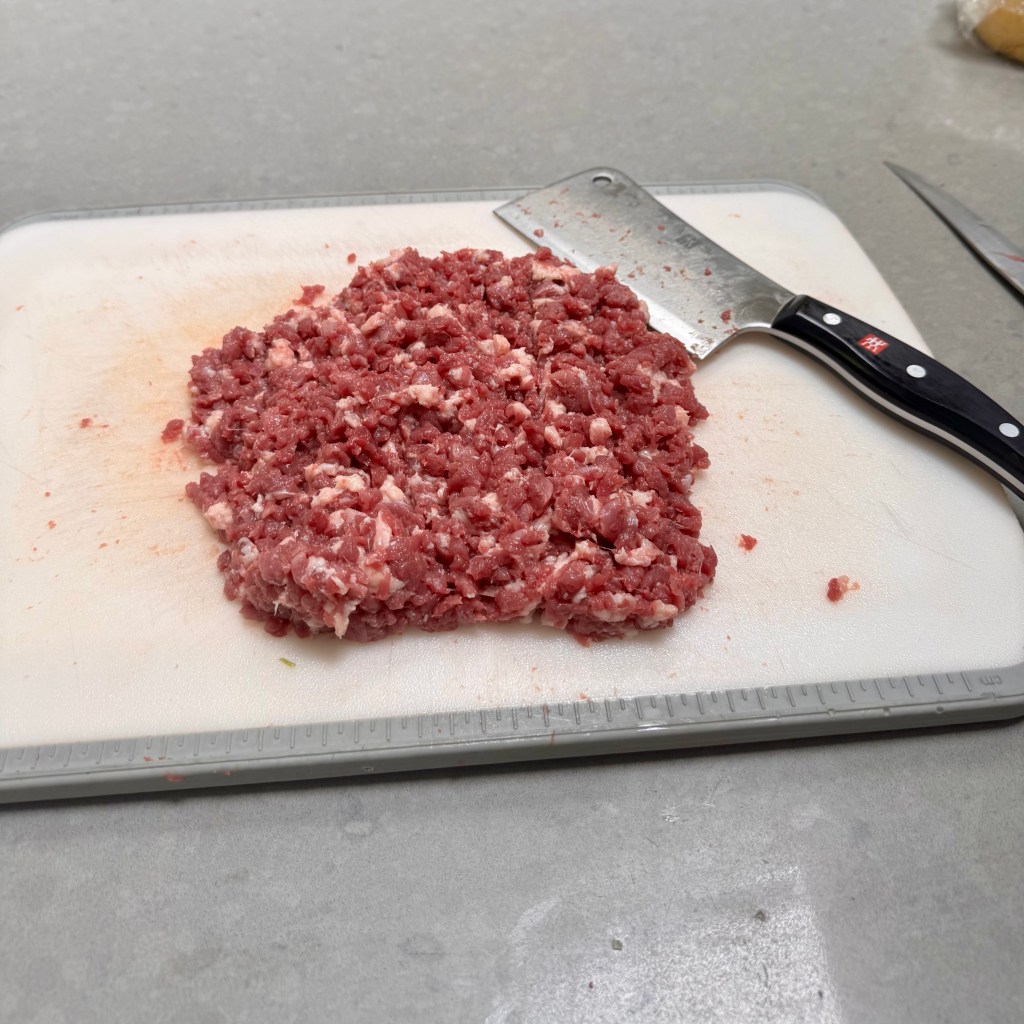
One step I particularly appreciated was hand-mincing the duck breast, including the fat. It takes a little more time than using ground duck or a food processor, but it creates a wonderful texture and allows the fat to slowly melt into the sauce as it cooks.
If I make the ragù again, I’d probably hold back about a quarter of the stock and add it only if needed. Mine took considerably longer than the recipe suggested to reduce and thicken, although the extra time was well worth the wait.
The finished dish was outstanding.
The ragù developed a deep, rich duck flavor layered with subtle warmth from the cinnamon and star anise. Bright green fava beans added freshness, color, and just enough texture to balance the richness. The pappardelle absorbed every bit of that flavorful sauce, making each bite deeply satisfying.
It’s absolutely a recipe I’ll make again.
One of the things I love most about cooking from the cookbooks I collect is how a single meal can transport me back to a place. Sitting at my kitchen table in Luxembourg, a bowl of pappardelle in front of me, I could almost picture the streets of Monti again! The cafés, the market, the bookstore, and the feeling of wandering through Rome with nowhere particular to be.
That’s what makes travel cookbooks so special to me. They’re not just recipes.
They reinforce memories.
Pappardelle al Ragù d’Anatra
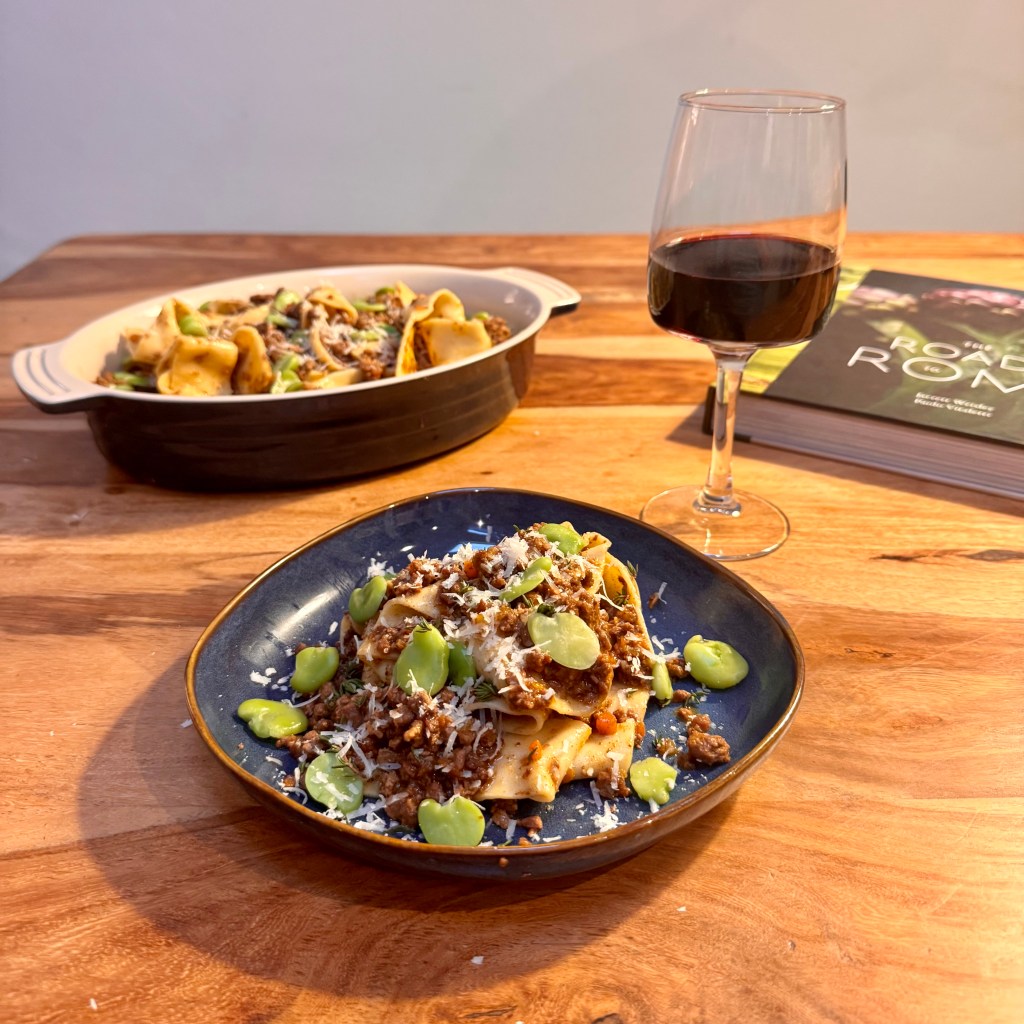
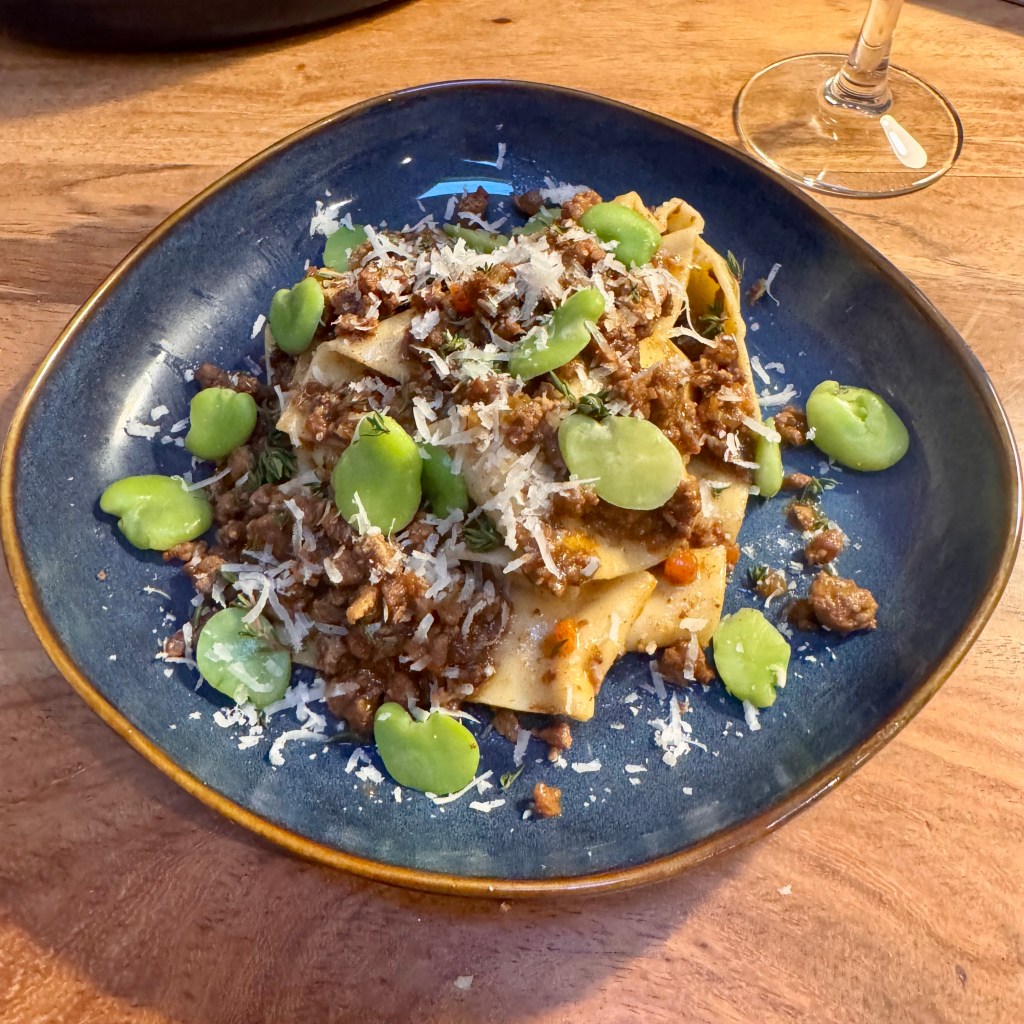
Serves 4
Pappardelle Pasta

The dish has two components: fresh pappardelle and a slow-simmered duck ragù. Both are straightforward and well worth the effort.
Ingredients
400 g 00 flour
100 g semolina flour (optional)
4 whole eggs
4 egg yolks


Method
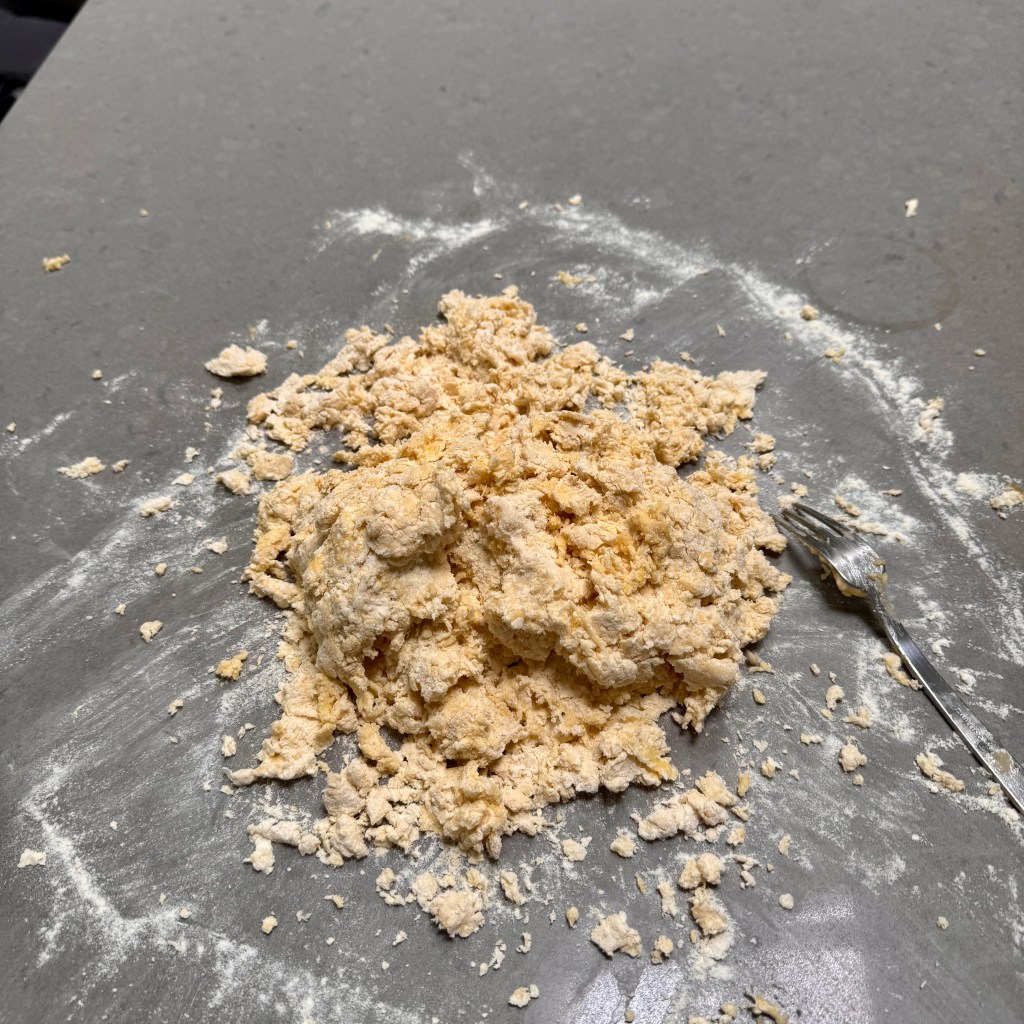
Combine the 00 flour and semolina, if using, then dump it onto a clean countertop. Make a well in the center of the flour, ensuring the walls are high enough to hold the eggs.
Crack the whole eggs and egg yolks into the well. Using a fork, gently whisk the eggs while slowly incorporating flour from the inside of the well until the mixture is no longer runny.
Once a shaggy dough begins to form, bring it together with your hands and knead briefly. At this point, I transfer the dough to a stand mixer fitted with a dough hook and knead on low speed for about 10 minutes.
Remove the dough and shape it into a smooth ball. Do the finger test by lightly pressing a dent into the dough. If it springs back, it’s ready. If not, return it to the mixer and knead for a few more minutes.
If the dough feels dry, whisk an additional egg and add a little at a time until the dough is smooth, glossy, and passes the finger test.
Wrap loosely in plastic wrap and let the dough rest for at least 1 hour.
Cut the dough into four equal pieces and shape each piece into a rectangle.


Using a pasta machine, roll each piece through setting #2 twice, then once each through settings #3, #4, #5, and finally #6.
Lightly flour a tray or countertop. Lay the pasta sheets flat, cover loosely with plastic wrap, and let them rest for about 10 minutes.
Roll each sheet into a loose cylinder and cut into strips about ¾ to 1 inch wide. Dust lightly with flour and place on a tray until ready to cook.
Bring a large pot of generously salted water to a boil. Cook the pasta until al dente.Ragù d’Anatra
Ragù d’Anatra
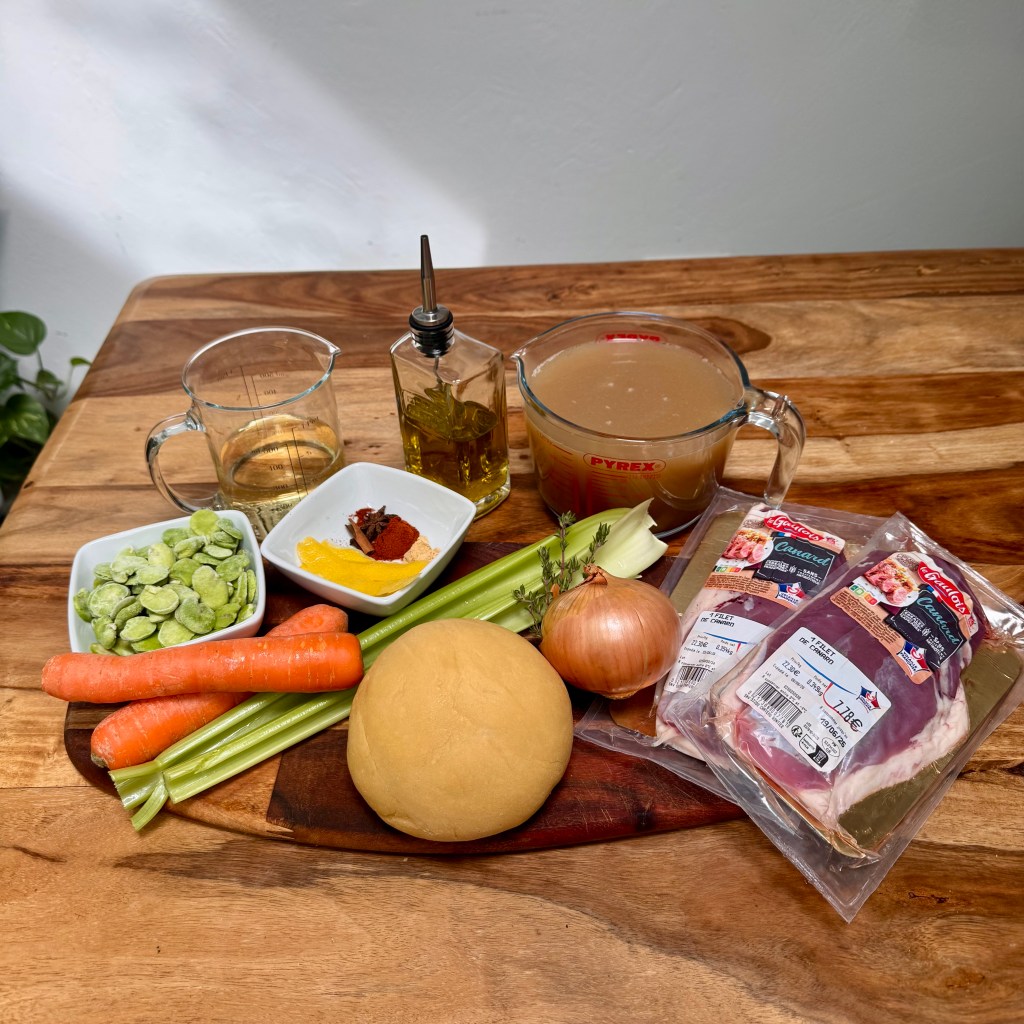
Ingredients
1½ lbs duck breasts, skin and fat included
Olive oil
½ cinnamon stick
1 star anise
2 whole cloves
½ tsp ground ginger
1 tsp paprika
Zest of 1 lemon
2 bay leaves
⅓ cup finely diced carrot
⅓ cup finely diced onion
⅓ cup finely diced celery
1 cup dry white wine
1 quart duck stock (or substitute chicken stock)
5 oz fava beans, lightly blanched
Salt and freshly ground black pepper
Fresh thyme leaves
Smoked ricotta salata or parmesan cheese, for serving


Method
Slice and dice the duck breasts, including the skin and fat. Spread the meat out on a cutting board and mince it by repeatedly chopping across the meat both lengthwise and crosswise until finely minced.
Heat a heavy saucepan or large skillet over medium-high heat. Add a drizzle of olive oil, followed by the minced duck.
Add the cinnamon stick, star anise, cloves, ground ginger, paprika, lemon zest, and bay leaves. Cook until the moisture has evaporated and the duck has browned and caramelized. You want deep color without burning the meat.

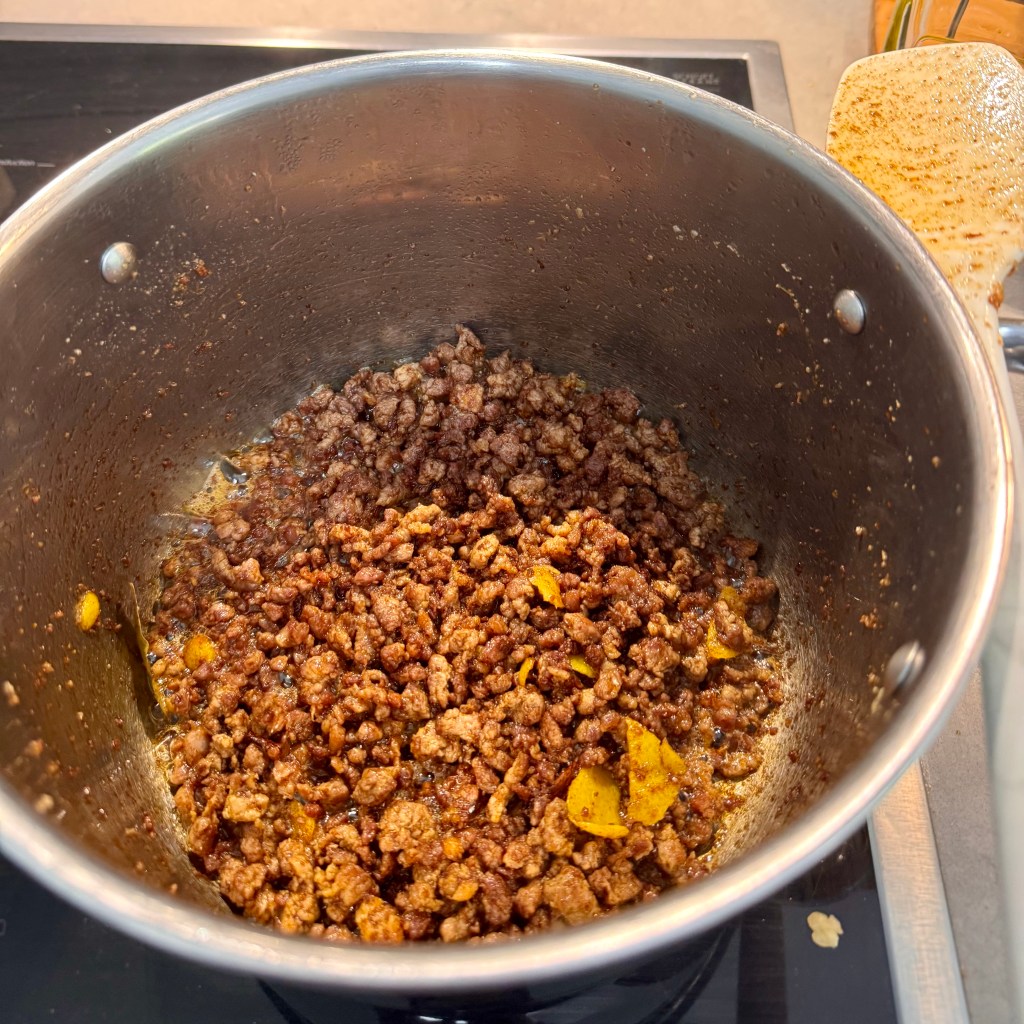

Reduce the heat to medium-low and add the carrot, onion, and celery. Cook slowly for 15–20 minutes, stirring occasionally, until the vegetables are soft and lightly caramelized.

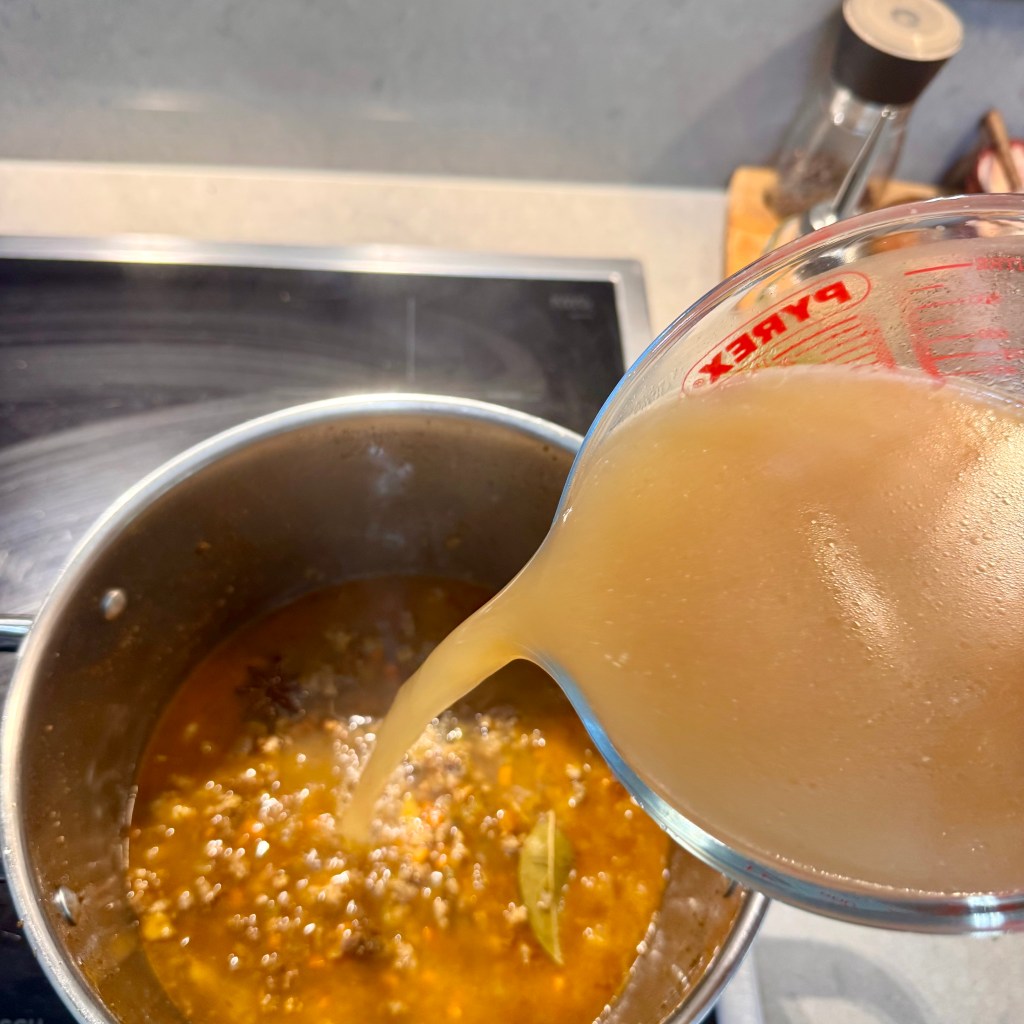

Pour in the white wine and reduce by about half.
Add about two-thirds of the duck stock and season lightly with salt. Remember that as the liquid reduces, the flavors will concentrate, so avoid over-salting at this stage.
Bring the ragù to a boil, then reduce to a gentle simmer. Cook for about 2 hours, stirring occasionally, until the ragù has thickened. If it reduces too quickly, add additional stock as needed. Depending on your pan and the moisture in the duck, the ragù may need another 30–60 minutes to reach the proper consistency.
Remove and discard the cinnamon stick, star anise, cloves, and bay leaves. Season with salt and freshly ground black pepper to taste.
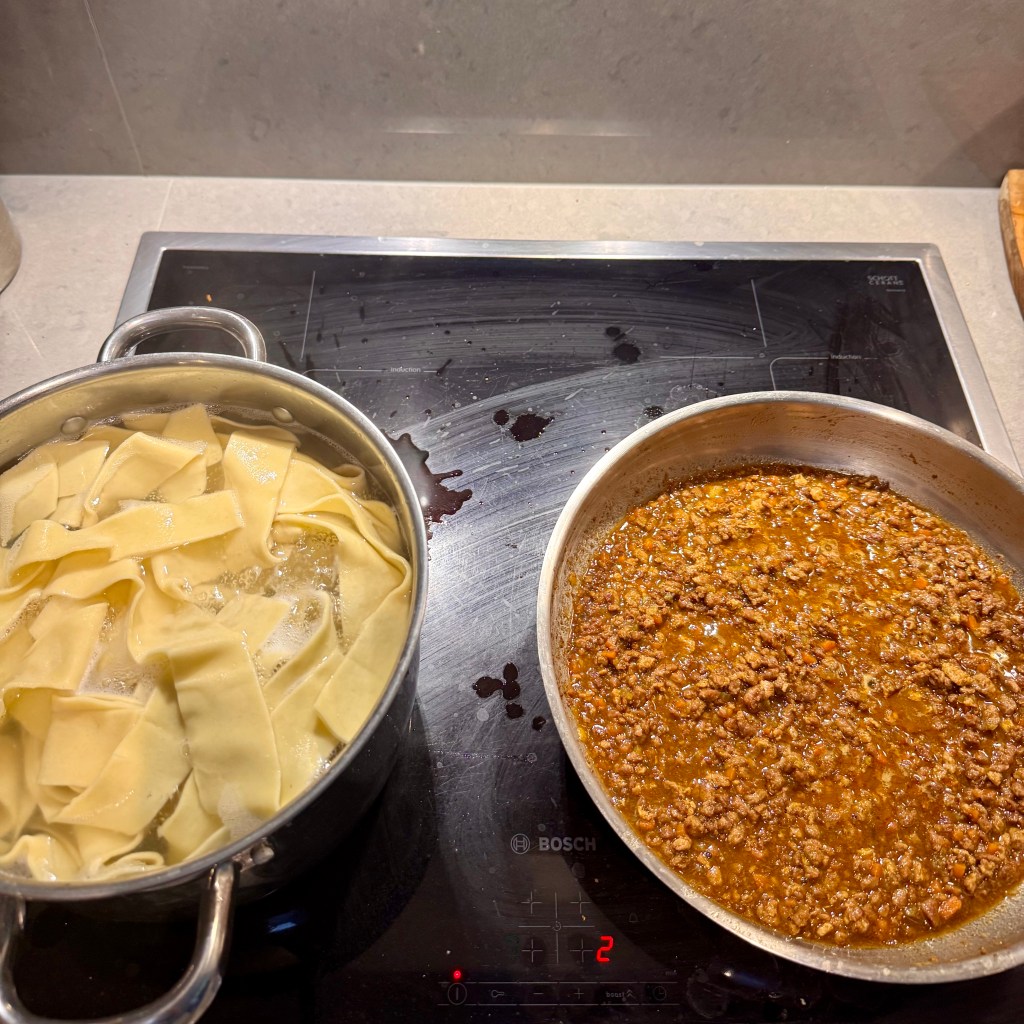
Add the cooked pappardelle, the blanched fava beans, and just enough pasta water to help the sauce coat the pasta. Toss over medium heat for 1–2 minutes until the sauce clings to the pasta. Be careful not to overcook the pasta or the fava beans.
Transfer to a serving platter or individual bowls. Sprinkle with fresh thyme leaves and finish with smoked ricotta salata or freshly grated Parmesan.
Serve immediately.
 Liz 'N Lux