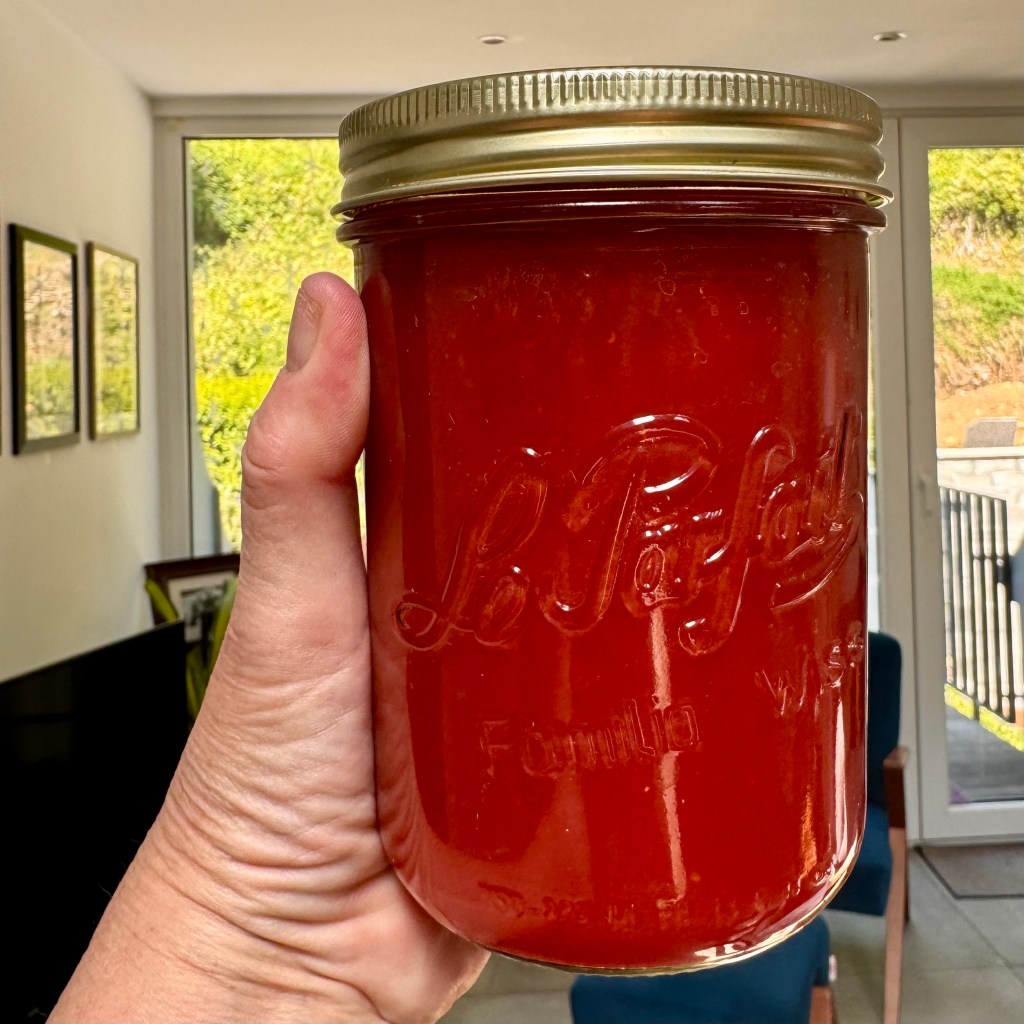
Ripe Cornue des Andes tomatoes, slowly cooked, passed through a food mill and preserved for sauces throughout the year.
Making passata is work, but there is simply no comparison to store-bought.
I used 12 kg of Cornue des Andes tomatoes from Les Paniers de Sandrine. The tomatoes are BIO, and Sandrine grows them from seed. She told us it had been a difficult growing year, but these tomatoes were perfect. They were ripe, sweet and lovely, with no need for added salt or sugar.
I kept the passata simple. Just tomatoes and bottled lemon juice for safe preservation. From the 12 kg of tomatoes, I made six 750 ml jars of passata.
What I Used
- 12 kg ripe Cornue des Andes tomatoes
- Bottled lemon juice
- Large stainless-steel stockpot
- Handheld food mill
- Clean 750 ml preserving jars with lids
- Large stockpot with a rack for water-bath processing
- Jar lifter
The Method
Prepare the Tomatoes
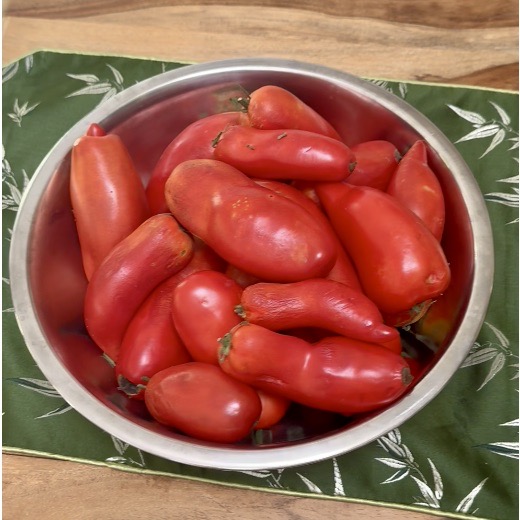
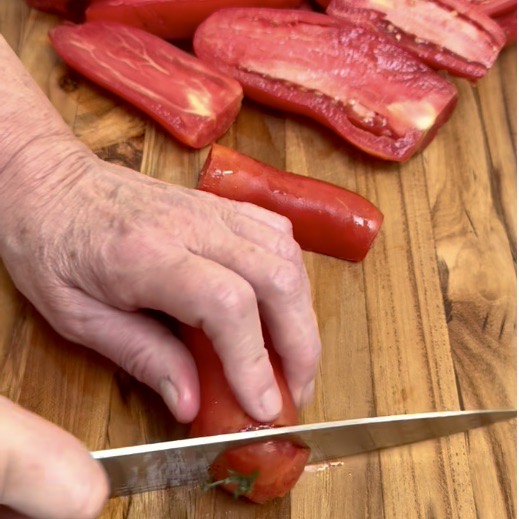
Wash the tomatoes and remove the stems and any damaged areas.
Trim away the firm part of the core, then cut each tomato in half.
Place the tomatoes in a large stainless-steel stockpot. There is no need to add water. The tomatoes will release plenty of liquid as they cook.
Gently Cook the Tomatoes
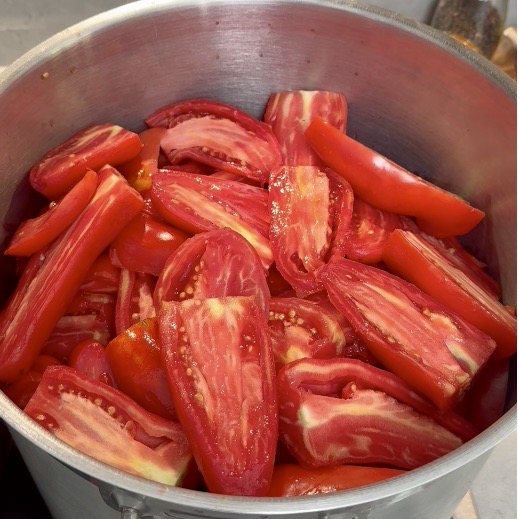
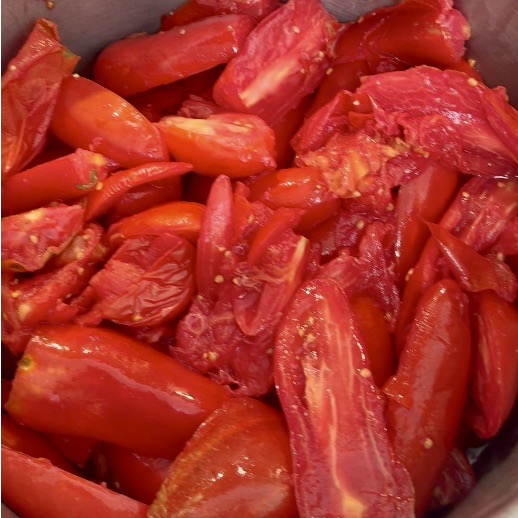
Cook the tomatoes over medium heat, stirring occasionally so they cook evenly and do not catch on the bottom of the pot.
Continue cooking until the skins have split or begun to separate and the flesh is soft and pulpy.
There is no need to overcook them at this stage. They only need to be soft enough to pass easily through the food mill.
Pass the Tomatoes Through a Food Mill
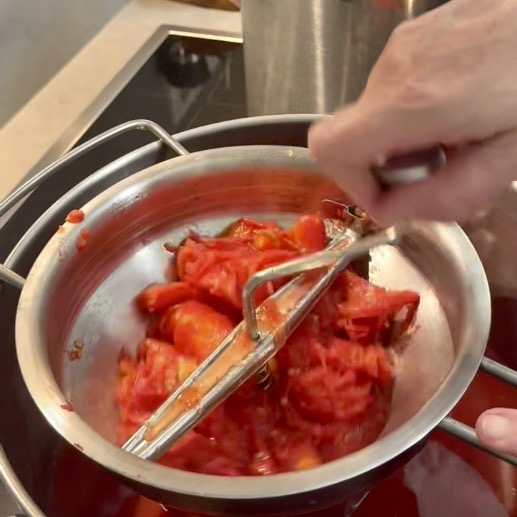
Working in batches, pass the softened tomatoes through a handheld food mill.
The mill separates the tomato flesh and juice from the skins, seeds and remaining core. It is an old-school process, but it produces a beautifully smooth passata.
Return the strained passata to a clean stockpot.
Reduce the Passata
Bring the passata back to a gentle simmer and allow it to reduce until it just begins to thicken.
Stir occasionally, paying particular attention to the bottom of the pot.
The passata should still pour easily. It will continue to thicken later when it is used to make a finished sauce.
Prepare and Fill the Jars
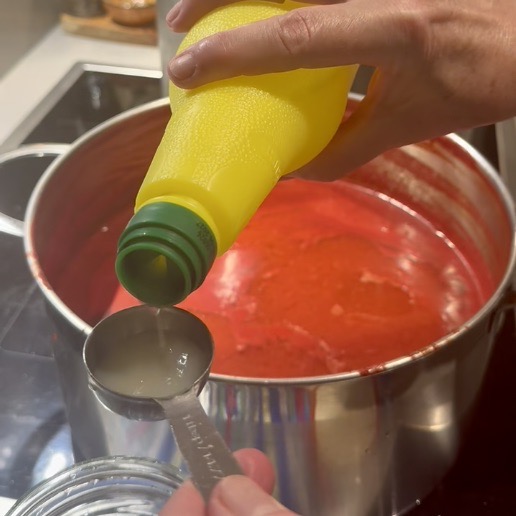
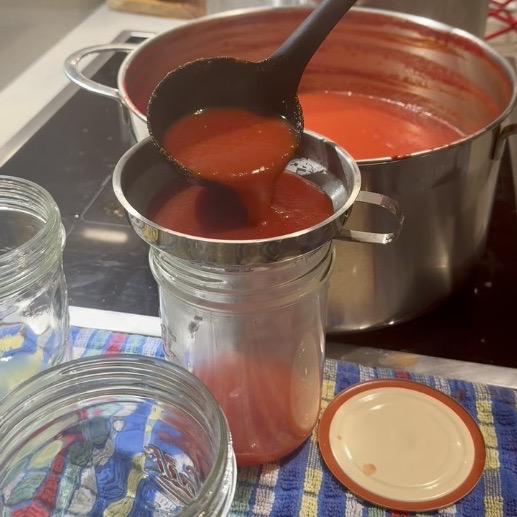
Add two tablespoons of bottled lemon juice to each 750 ml jar. Bottled lemon juice has a standardized acidity and helps ensure the tomatoes are acidic enough for safe water-bath preservation.
Ladle the hot passata into the jars, leaving approximately 6 mm, or ¼ inch, of space at the top.
Slide a clean plastic or wooden utensil around the inside of each jar to release trapped air bubbles. Check the headspace again and add more passata if necessary.
Wipe the rims carefully before adding the lids and screw bands. Tighten the bands until fingertip-tight without forcing them.
Process the Passata
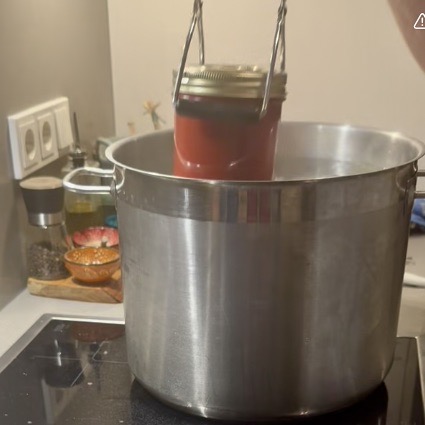
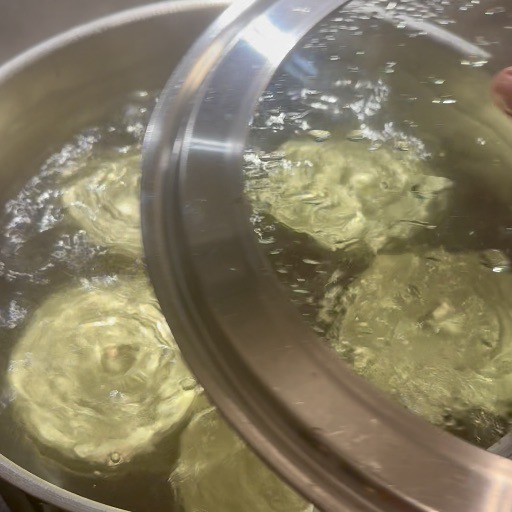
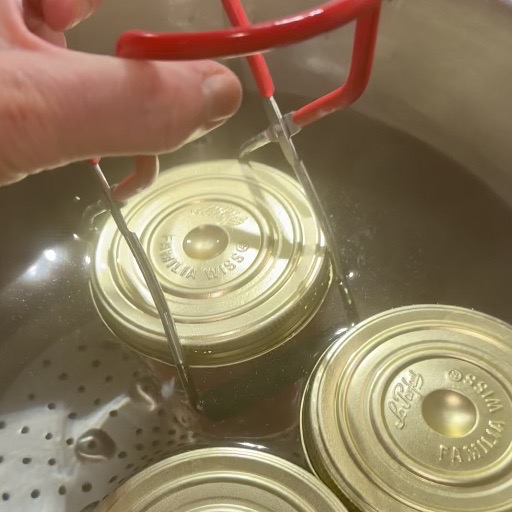
Place the filled jars upright on a rack in a large stockpot of boiling water. The jars should be completely covered with water.
Cover the stockpot and process the jars at a full boil for 45 minutes. Begin timing once the water has returned to a steady boil.
Turn off the heat, remove the lid and allow the jars to sit in the water for five minutes.
Lift the jars straight out and place them upright on a towel or heatproof surface. Do not retighten the lids.
Leave the jars undisturbed at room temperature for 12 to 24 hours.
Check the Seals
Once the jars have cooled completely, remove the screw bands and check each seal.
The centre of the flat lid should curve slightly downward and should not move or click when pressed. Any jar that has not sealed should be refrigerated and used promptly.
Label the sealed jars with the contents and date before storing them in a cool, dark place.
A Note About Preserving
Safe processing times can vary depending on jar size and elevation. I recommend consulting the National Center for Home Food Preservation and following current tested guidance before preserving tomatoes at home.
What to Look For
- The tomatoes should be completely ripe, sweet and free from spoilage.
- The skins should split and the flesh should soften before milling.
- The tomatoes should remain juicy rather than cooking down completely before milling.
- The finished passata should be smooth and pourable.
- The filled jars should have approximately 6 mm of headspace.
- The processing water must completely cover the jars.
- Properly sealed lids should not flex or click when pressed.
Make It Your Own
Passata is deliberately simple. It is a starting point rather than a finished tomato sauce.
When I open a jar, I can take it in any direction I like. I can add garlic, onions and herbs for pasta sauce, use it in lasagna or eggplant Parmesan, or slowly reduce it for pizza.
By leaving the passata unseasoned, each jar remains adaptable to whatever I decide to cook.
What I Learned
- Friends are often the best source of recommendations for new places to visit. That is how I discovered Les Paniers de Sandrine.
- The variety and quality of the tomato make an enormous difference.
- Cornue des Andes are my new favourite tomatoes for passata.
- When tomatoes are properly ripe and naturally sweet, there is no need to add salt or sugar.
- The tomatoes only need to soften before going through the food mill. Overcooking at that stage is unnecessary.
- Passata should be reduced only until it begins to thicken. It can be reduced further when making the finished dish.
- Making passata from scratch takes time, but the flavour cannot be compared with store-bought.
- A good passata is the foundation of the best tomato sauces.

